Southeast Asian Struggles
Among the least prepared for the Gulf crisis, some countries are responding fastest.


Reverberations continue from a Persian Gulf crisis whose instigators figured would last weeks but now drags into its fourth month.
Negotiations between Donald Trump and Iran’s leadership seem stalled. The Strait of Hormuz remains almost completely closed.
Asia has taken the biggest direct hit from the crisis, since so much of the region’s oil and natural gas supplies comes directly from the Persian Gulf. We looked at China in the last post. This one delves into Southeast Asia’s struggles.
But it’s critical to understand how the fallout in Asia is shifting the global energy landscape in ways that undermine U.S. power over the long haul, even if U.S. oil and gas companies are some of the biggest beneficieries right now.
China, as we saw, is the most important country best prepared to weather and ultimately capitalize on the crisis. The countries of Southeast Asia were among the most important countries that were least prepared.
These emerging economies are sprinkled from Malaysia and Singapore in the west to Indonesia to the East. In between, they include Vietnam, the Philippines and Thailand.
Their economies are growing fast and account for an outsized share of global energy demand growth. And they are deeply entrenched in the global supply chains of Europe, the U.S. and, increasingly, Chinese companies.
They largely depend on coal, the dirtiest of fossil fuels, to produce electricity. But they’re mostly keen to reduce that dependence in the coming decades. They plan to do that through some combination of importing natural gas in its liquified form, known as LNG, and building out renewable energies such as solar, wind, and geothermal, increasingly alongside storage from batteries.
They face the classic choice between fossil fuels and renewables. The Gulf crisis is tilting the balance towards renewables and batteries.
Why? Economics and energy security.
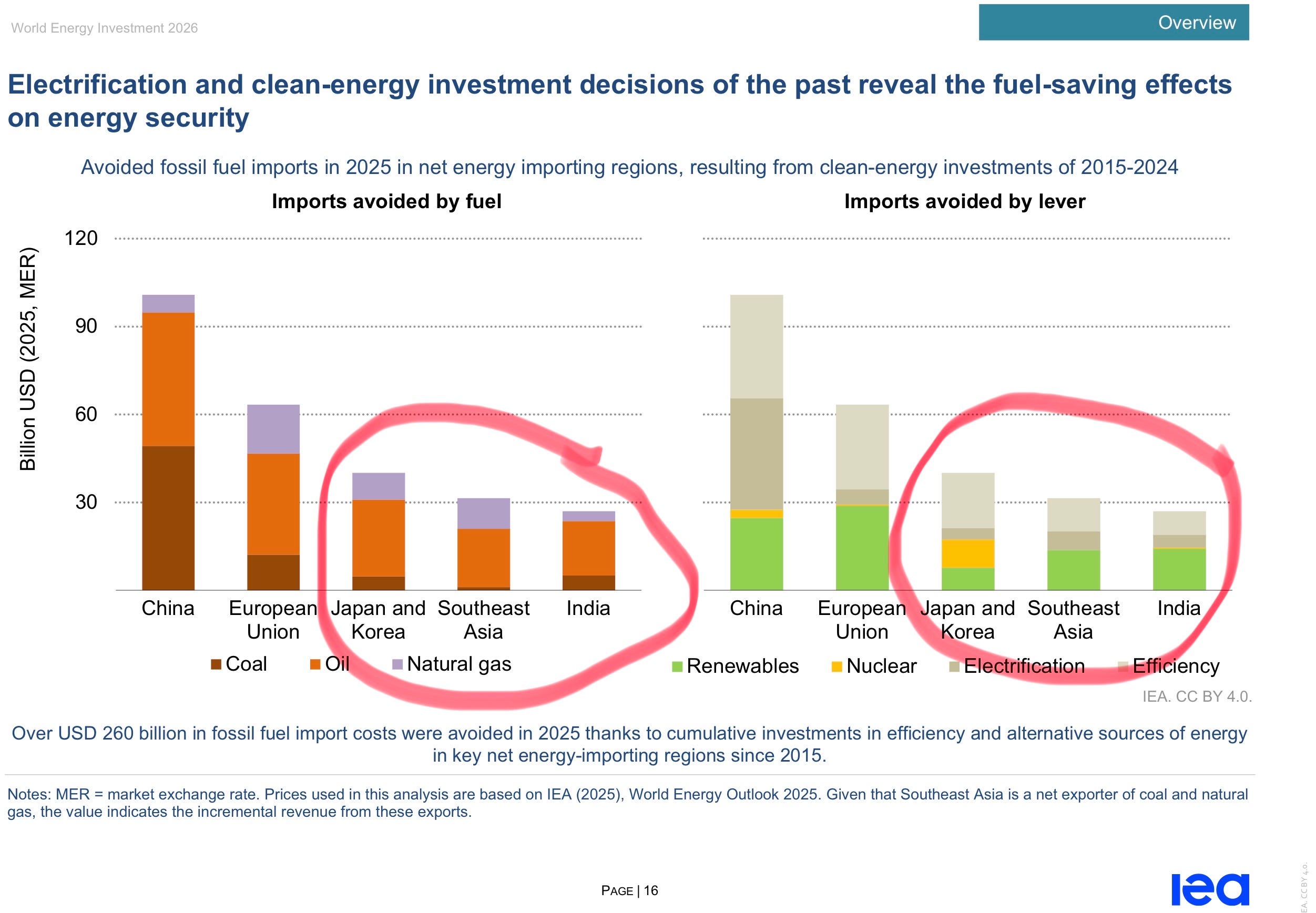
Unlike China, with its massive crude stockpiles, or the U.S. with its own oil and gas reserves, these countries have basically one shock absorber have to protect their vulnerable poor and lower income middle classes. Their governments subsidize the difference between the import price of oil and gas and the price consumers pay.
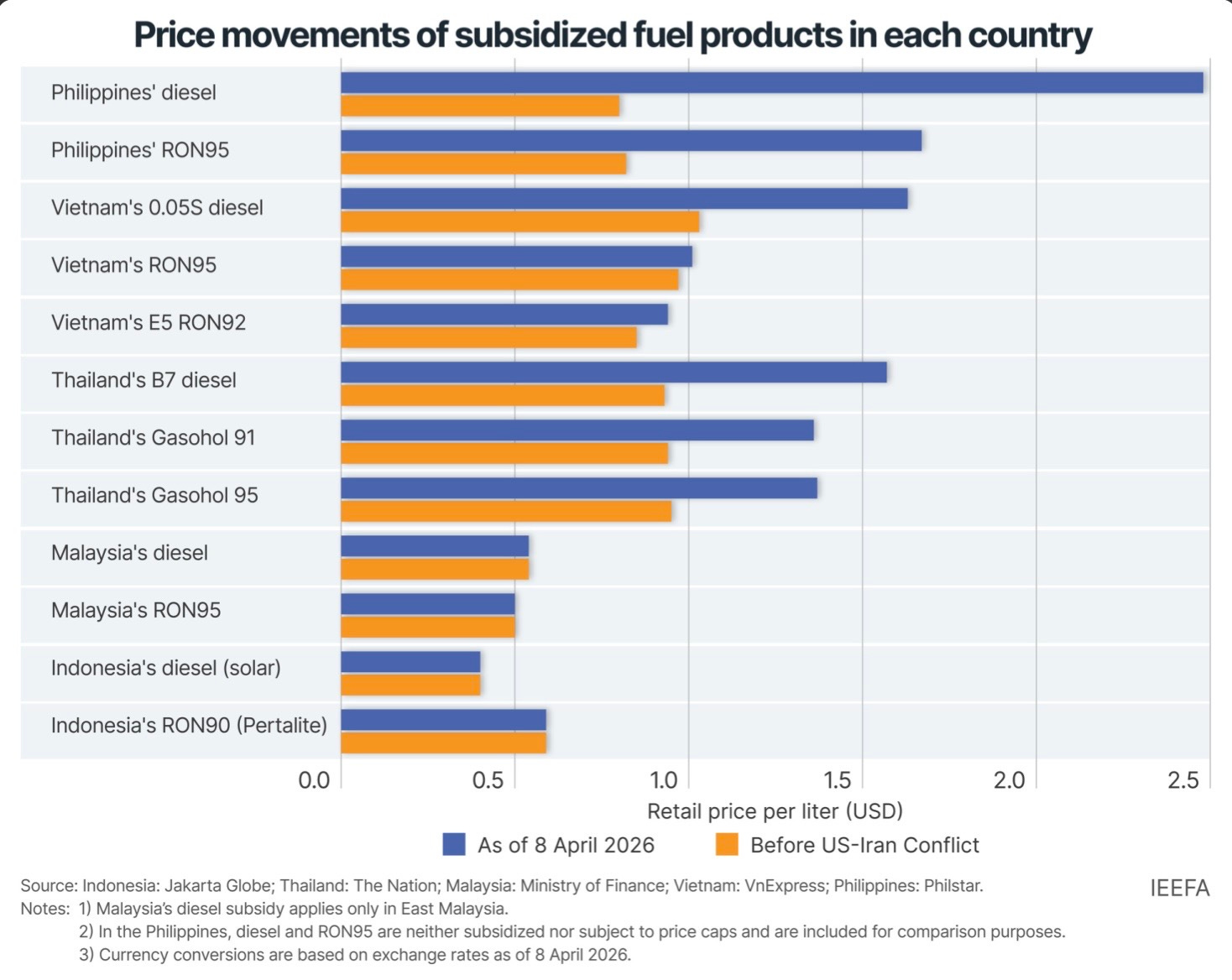
To what extent has varied. In Indonesia, the government has, painfully, absorbed nearly all of the higher import costs. The government of the Philippines, on the other hand, declared an energy emergency and allowed retail prices to spike, effectively forcing a rationing of available supplies.
You can see in the chart below the range of responses. The yellow bar represents the price consumers paid before the Iran war. The blue bar is afterwards, as of early April. Where the two bars are the same, the government paid the difference between what it cost to import the products before and after the war. Where the bars diverge widely the governments passed the pain on to consumers along with emergency measures to force cutbacks in non-essential energy use.
This is the second major spike in the price of imported energy in the past five years, after the price shock when Russia invaded Ukraine in 2022. These countries are realizing that importing almost all of their energy is not sustainable; And unlike past crises — such as the oil shocks of the 1970s — there are real, economical alternatives in renewables. That’s especially true when tied, over the longer haul, with moving to electric vehicles — which essentially turn demand for oil-based fuels into demand for electricity that can come from renewables.
This transition isn’t easy, simple or fast. No doubt, when the Strait of Hormuz opens demand for imported oil and gas will snap back in these countries and elsewhere. More domestic coal could be burned to meet demand spikes from the rising use of air conditioning and growing manufacturing, including from new companies that assemble solar modules and electric vehicles.
Higher interest rates and rising costs, both direct results of the Gulf crisis, will challenge renewable energy projects. Virtually all of the investment in wind farms and solar power comes upfront, though they can be far less expensive than building natural gas or even coal plants over their full lifetime.
After they’re built, the fuel is free.
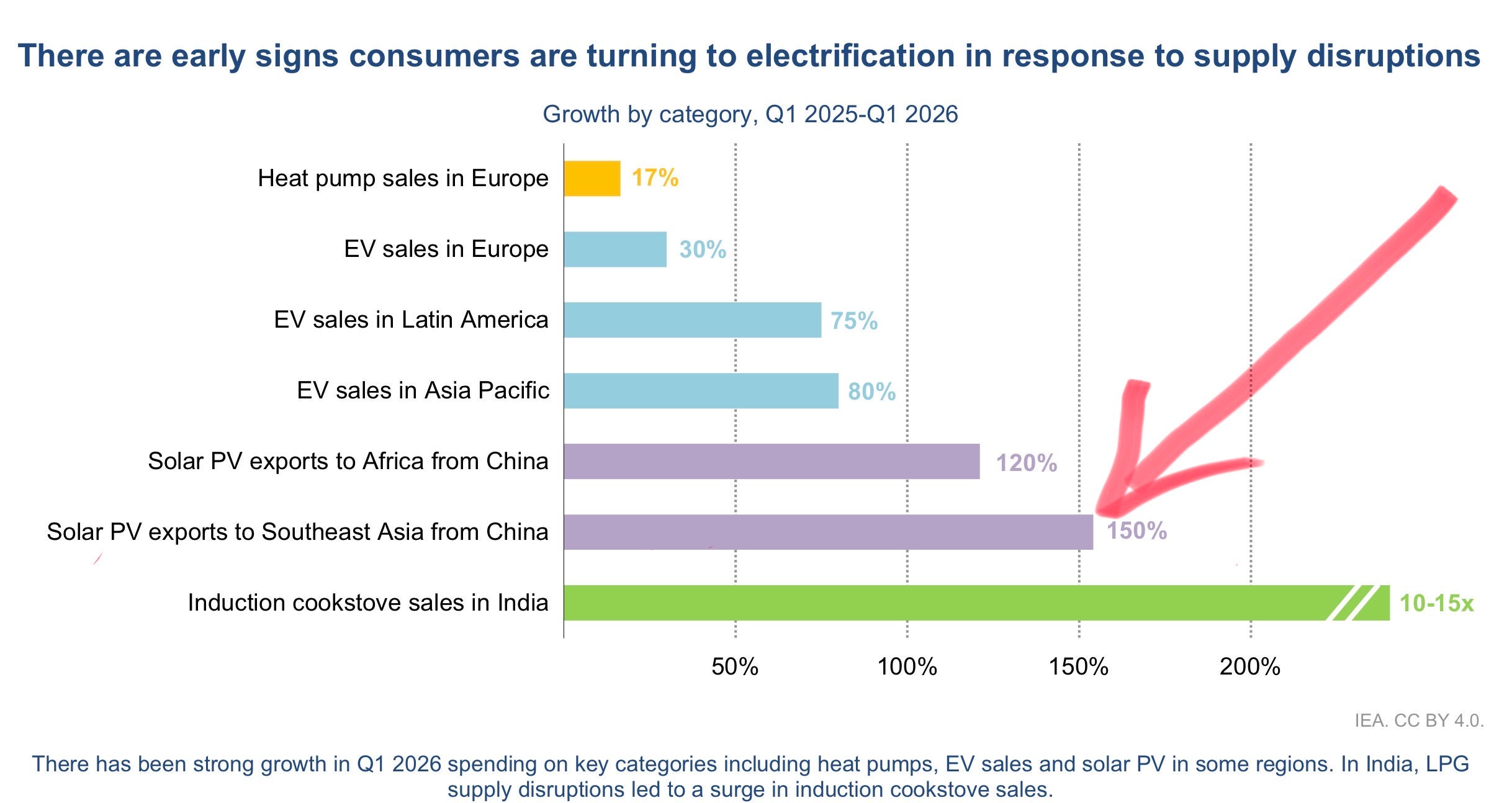
That’s what’s likely to make the difference going forward for these countries. They put off transitioning their energy sources when that meant paying more simply to address climate concerns by reducing emissions. Hard as it still may be, they’re far more likely to jump aboard a transition that brings greater energy security and lower import bills while restraining their coal use.
The Philippines, where the crisis quickly reached a boiling point as consumer energy prices skyrocketed, offers a view of what’s likely to play out elsewhere in the region.
Rooftop solar installations were already rising quickly before the Gulf crisis, doubling last year, according to Ember, a think tank that analyzes clean energy trends.
Now the most expensive electricity prices in the region are accelerating solar uptake even more. This chart shows that the Philippines has been the biggest importer of solar panels from China after the Netherlands, whose ports are the entry point for nearly all the panels shipped into Europe.
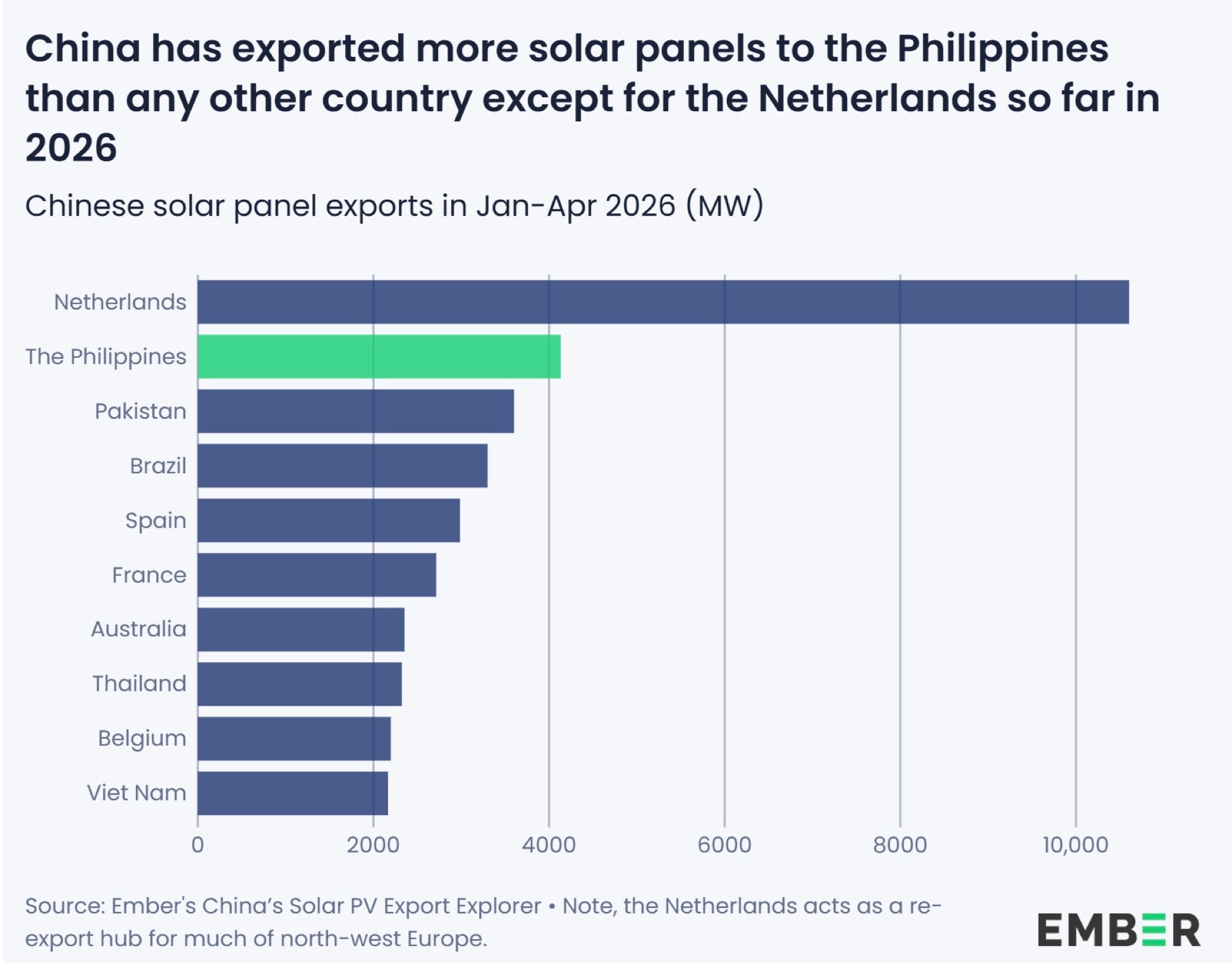
Of course, these are imports, too. But they are different than dependence on oil and gas, which need to arrive every day — at whatever price they cost that day — forever.
These solar panels begin saving consumers’ money as soon as they’re put up on rooftops — or even lawns and balconies — as we’ve seen recently in Pakistan, not to mention Germany. Even as they are welcome relief for their owners, they can also complicate and ultimately undermine the country’s overall electricity infrastructure, the sort of problems Pakistan’s has also faced.
The Philippines government is already introducing programs to spur more renewables while effectively integrating them into the grid. More of this will be needed.
But the change is underway.