Alternative Energy
Seek and you shall find.

It’s hard to imagine a better situation for the U.S. oil and gas industry than what’s happening in the Persian Gulf today — or a worse one for the industry’s future.
Few observers expected the clampdown on shipping the war has wrought, perhaps least of all U.S. oil and gas companies.
Still, their timing couldn’t have been better.
American production of both commodities climbed to all-time highs over the decade since the U.S. began sending crude oil and LNG, or liquified natural gas, overseas.
Now the closure of the Strait of Hormuz has bottled up their biggest competitors — Qatar for LNG; Saudi Arabia, Kuwait, Iraq and the United Arab Emirates for oil.
The result for U.S. fossil fuel companies has been a confluence of additional sales at higher prices.
Trouble is, this is the second giant global fossil fuel shock in five years, after Russia’s invasion of Ukraine in 2022. This shock is even worse, not just because it’s the largest energy disruption ever, but also because it has shaken the foundation of global energy markets, the Persian Gulf.
Under American protection the gulf has been the world’s most reliable font of fossil fuels for a half century, critical to the economy of every country on earth.
Oil and gas will again flow from the gulf, perhaps even soon. Months will be needed to return to oil to full volumes, years for LNG. Prices will fall from their current war-induced heights. Over time, some new ways to get around the strait will be erected, via pipelines and new sources of supply.
But an aftertaste among buyers will linger, even more so than during the decades after the 1970s oil crises that reshaped oil demand globally. That’s because two pillars of global energy stability — the Organization of the Oil Exporting Countries (OPEC) for oil and Qatari LNG facilities — have fallen into question, more or less for good.
Decades-long LNG supply deals with Qatar were the industry gold standard before the war. They’ll no longer be considered rock-solid after shipments stopped when Iran shut the strait and attacked Qatari production facilities. Qatar has no feasible way to get its LNG to global markets other than the strait.
OPEC, whatever one thinks of cartels, has worked to stabilize the global oil market, striving to keep prices in a range that has worked over the years for both buyers and sellers. The UAE, arguably OPEC’s second most important member, unceremoniously abandoned the group.
Oil prices will be subject to more stomach-churning booms and busts going forward.
So both oil and gas will be riskier and more expensive.
That means countries, companies and individuals will turn — indeed are already turning — to more secure, less costly energy sources where they exist. Something similar happened after the 1970s crises. Energy efficiency measures took hold from Japan to America. Oil was largely dropped from electricity generation, replaced by more secure coal and natural gas.
Compared to back then, more and better alternatives exist today.
In the near term, more coal might get burned. Japan, for example, loosened coal restrictions out of concern over LNG supplies. But so far, little evidence has emerged to indicate the dirtiest of fossil fuels will come roaring back, even in the short term.
What has jumped is renewable energy deployment. That’s thanks to the only industry with better timing than U.S. oil and gas: clean technology in China. Chinese manufacturers largely have the solution in hand after two decades building renewable energy at a furious pace at home.
They’re now exporting at a furious pace as the global energy crisis spurs action.
In March, the first full month after the Hormuz closure, 110 countries imported more solar technology from China — which dominates solar production globally — than in any of the six previous months, according to Ember, a think tank that tracks renewable energy. Fifty of those countries imported more solar than ever before.
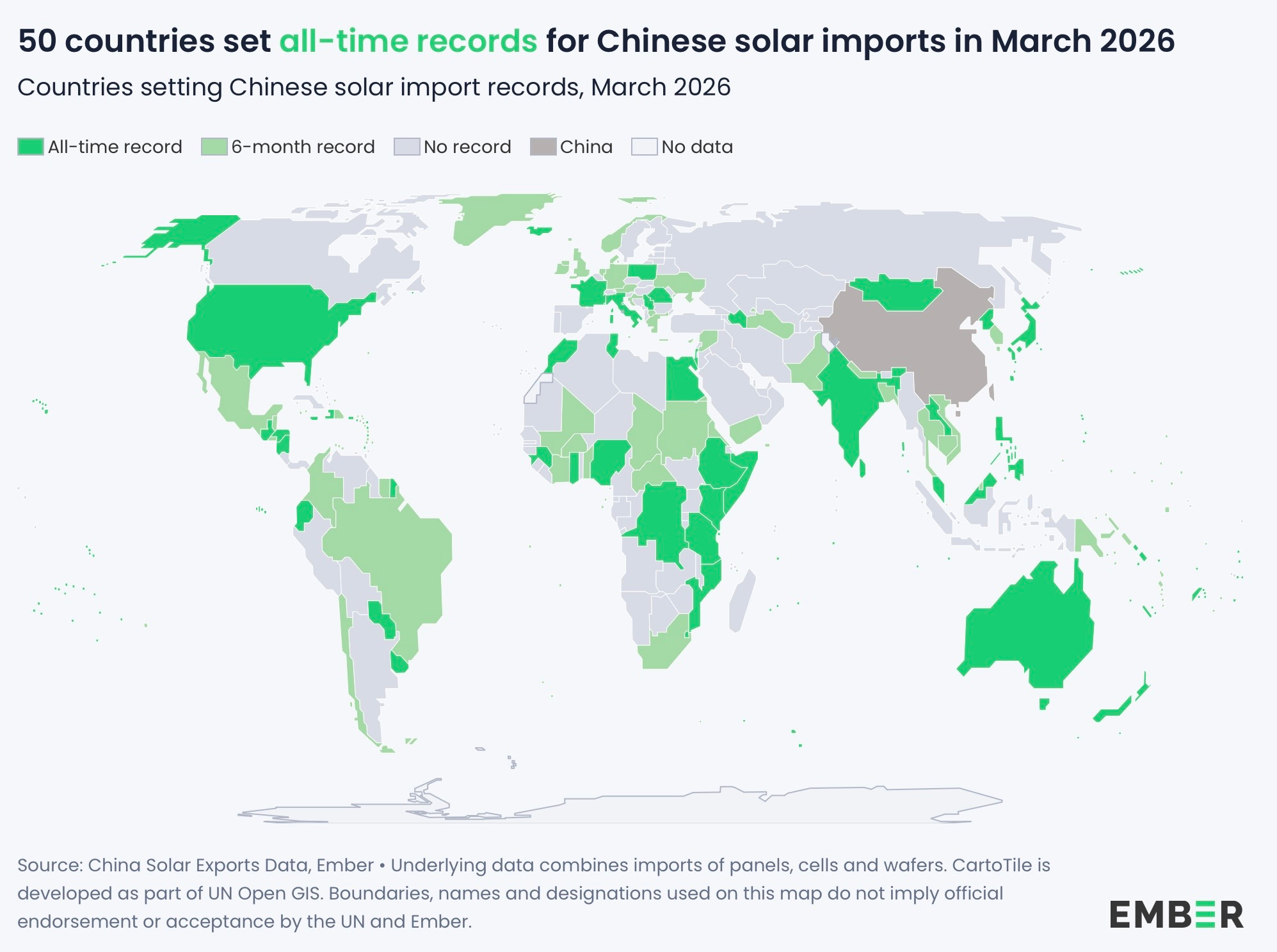
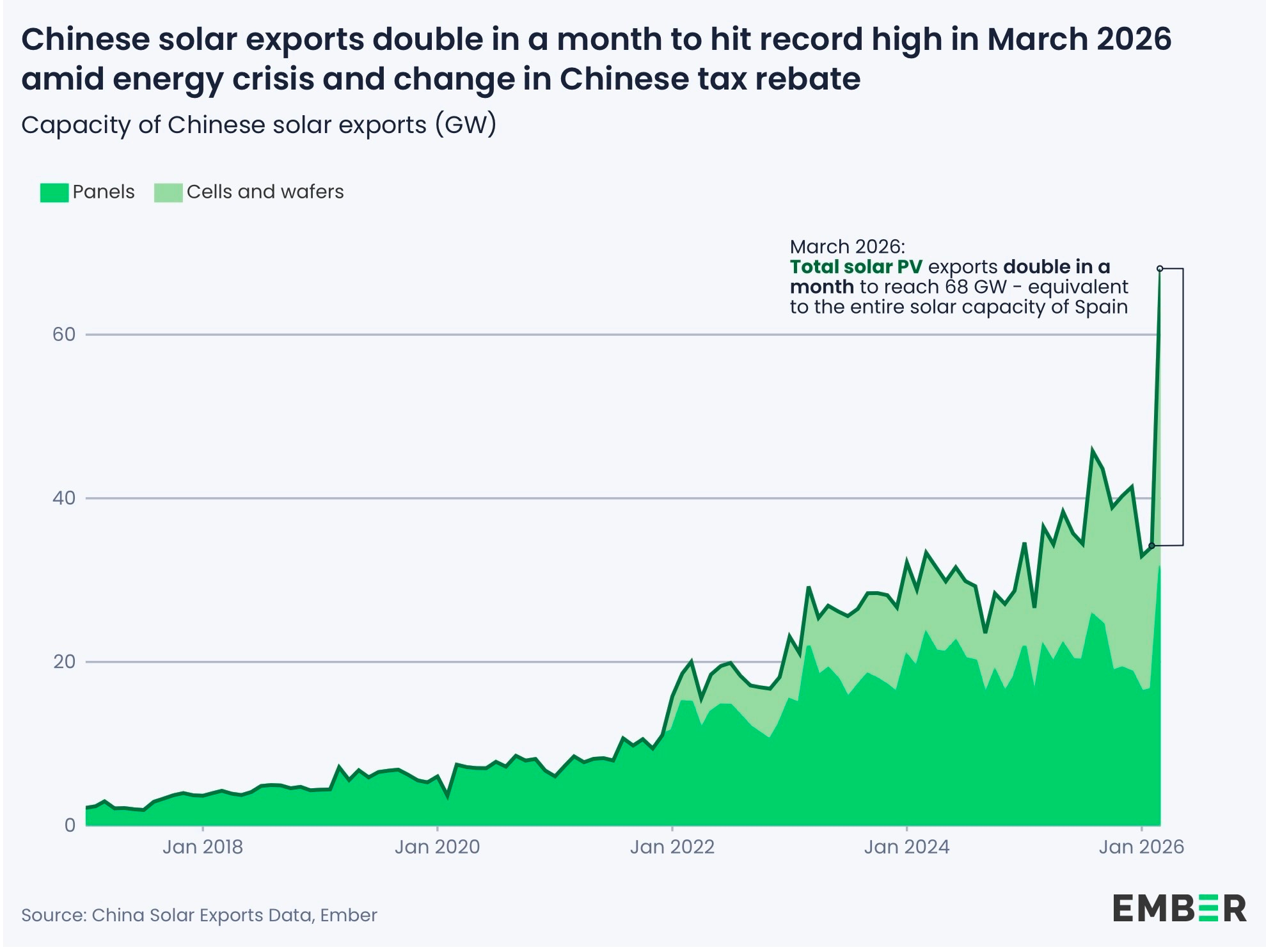
Three quarters of China’s March solar exports went to Asia and Africa, fast-growing regions heavily dependent on fossil fuel imports.
China’s battery exports surged in March, as well, up 44% over February, including especially large shipments to Europe, Australia and India. Many of these batteries were ordered before the war, as were some of the solar technologies.
But they’ve arrived at a critical moment, and point to the longer-term changes the Persian Gulf crisis will only accelerate.
Renewable energy costs have been falling for decades, with solar, wind and now batteries having plunged well over 90% in the past decade. Battery prices may have fallen as much as 30% in just the pasts 18 months.
Largescale batteries can store cost-free wind and solar energy when available and dispatch it later. Combinations of renewables and batteries are increasingly able to more cheaply match gas and coal’s ability to provide power when needed, especially in countries with plentiful sun and consistent night winds.
The graph below shows the falling overall cost of combined solar and battery installations that provide power 95% of the time in seven countries on every continent except Antarctica.
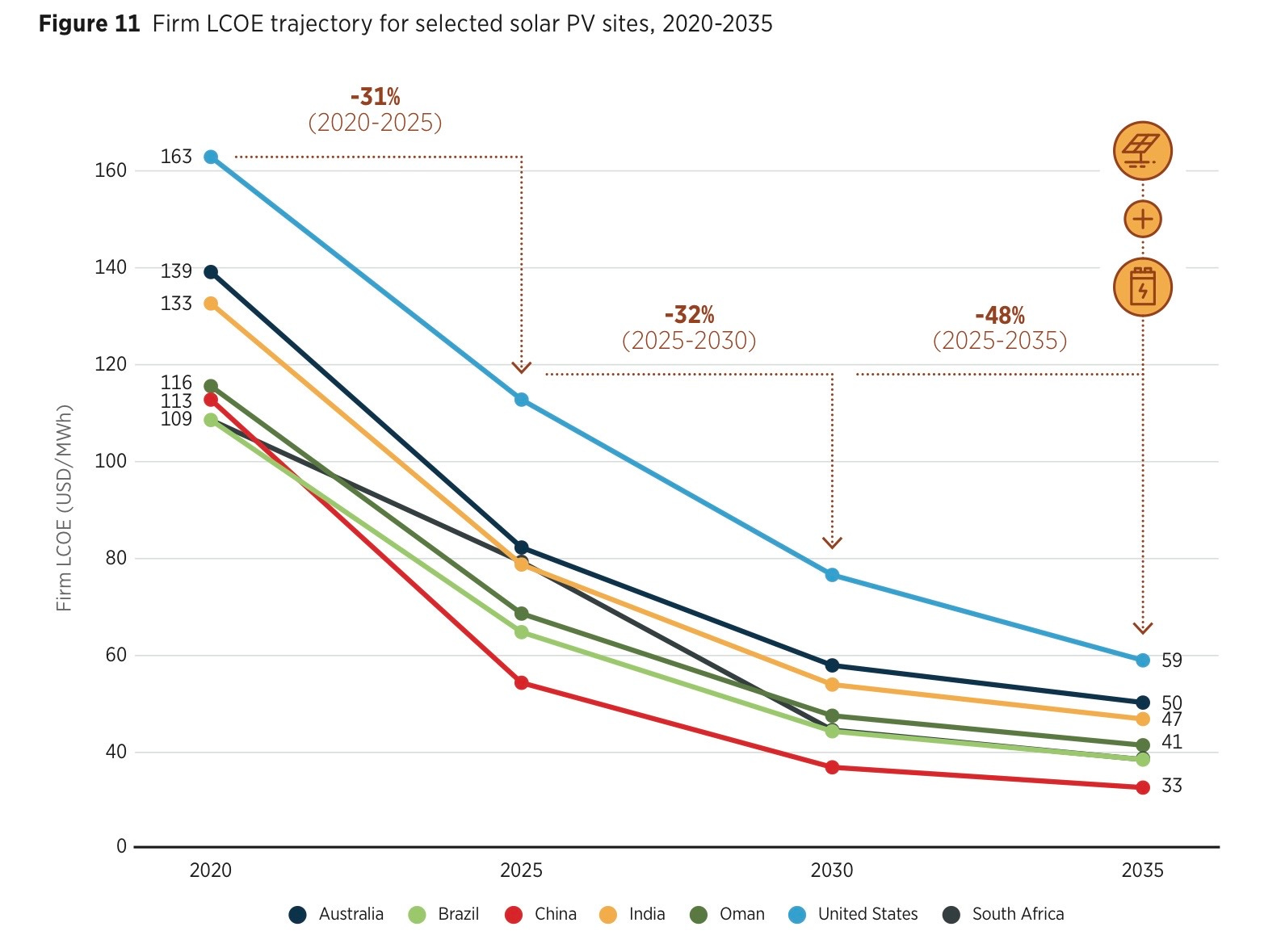
In these regions — many of which are hardest hit by the Hormuz closure, South and Southeast Asia, Africa, South America, Europe and the Middle East — these combined facilities are less expensive than fossil-fueled electricity plants, according to a new study by the International Renewable Energy Agency.
In some renewable-rich locales, replacement is already underway. In the first three months of the year across most of Australia, generation from solar, wind and especially batteries rose while coal- and gas-fired generation fell.
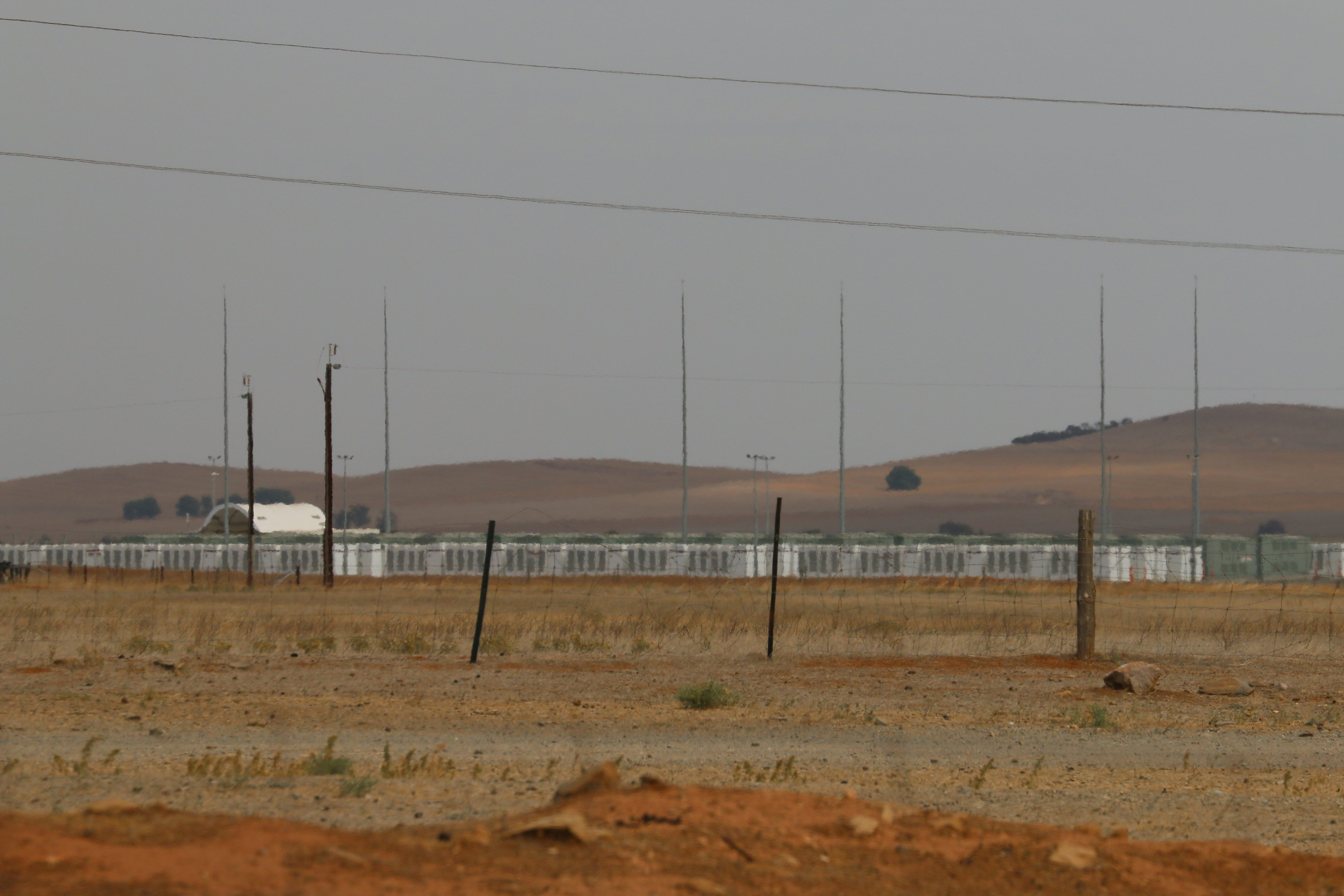
Similar dynamics are playing out in the U.S. state of California, which has also been adding batteries at an astonishing pace.
Abu Dhabi, the capital of the United Arab Emirates, is building a solar-plus-battery project that will provide more electricity than the emirate’s four nuclear reactors twenty-four-hours-a-day, every day.
Other places are catching on, especially after the start of the war.
Over the longer haul, consumers and companies will pare use of gasoline and diesel by purchasing electric vehicles. Countries with large oil imports will encourage them.
In India, where oil imports already threatened to spiral out of control, motorcycles and rickshaws have been going electric for some time. Autos are following suit, though the slow pace of building charging infrastructure will restrain the growth. Europeans are eyeing EVs with growing eagerness amid the current crisis. Ethiopia, Africa’s most populous country, banned imports of conventional combustion-engine cars last year while welcoming imports of electric vehicles. Dozens of other countries, particularly in the developing world, are keen to see EV sales expand.
China is ready with the least expensive, best quality EVs.
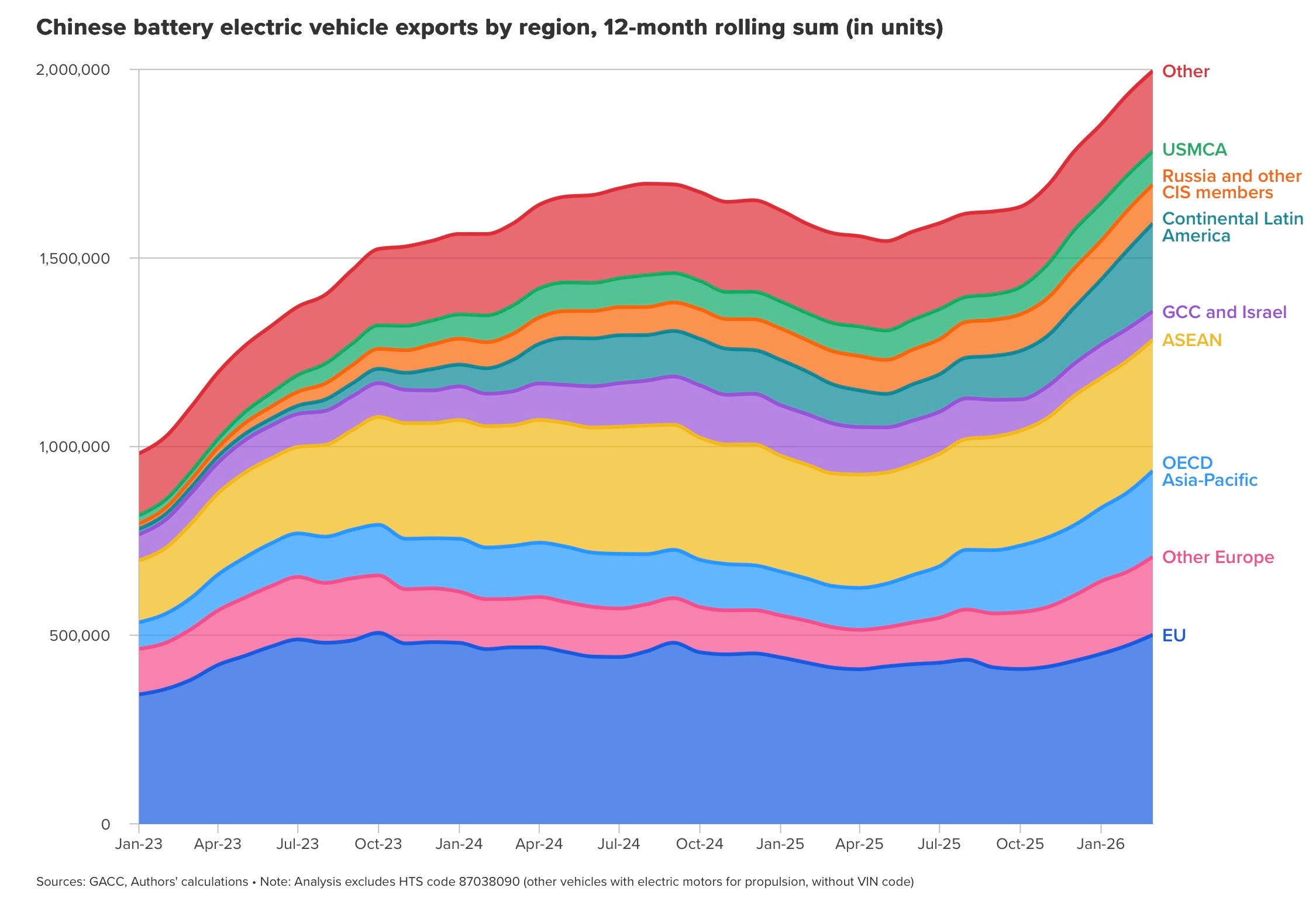
Exports were already soaring and will gain momentum. China’s leading car company, BYD, builds its own ships to deliver cars to foreign markets from Mexico to Europe, Southeast Asia to Chile. It already has factories overseas in Thailand and Uzbekistan, and is building plants in Indonesia, Brazil, Hungary and Turkey.