
Future Town, Texas
Stargate, OpenAI’s mega-data center project in Abilene, may be on to something.

This is the fourth a series of posts about my recent drive from Memphis, Tennessee to Amarillo, Texas looking at some of the biggest data center projects and how they are changing the world.
Earlier stops are here on The Energy Adventure(r) home page.
Abilene, Texas was born over two days in March of 1881 with a land auction midwifed by the great technological innovation of the industrial age: the steam engine.
A group of cattlemen and land speculators convinced the Texas & Pacific Railway to run its new line through the area, part of a vast expanse of open land used mostly by native Americans. They named the tent encampment that sprung up overnight Abilene after a Kansas trailhead town further east.
Soon they began calling it, “The future great city of West Texas.”
Abilene now once again finds itself on the frontier edge of a world-changing technology, one that may well define our digital age: artificial intelligence.
The city is home to two of the first sites for the OpenAI Stargate data center project. Each occupies about the expanse of land auctioned off over two days back in 1881.
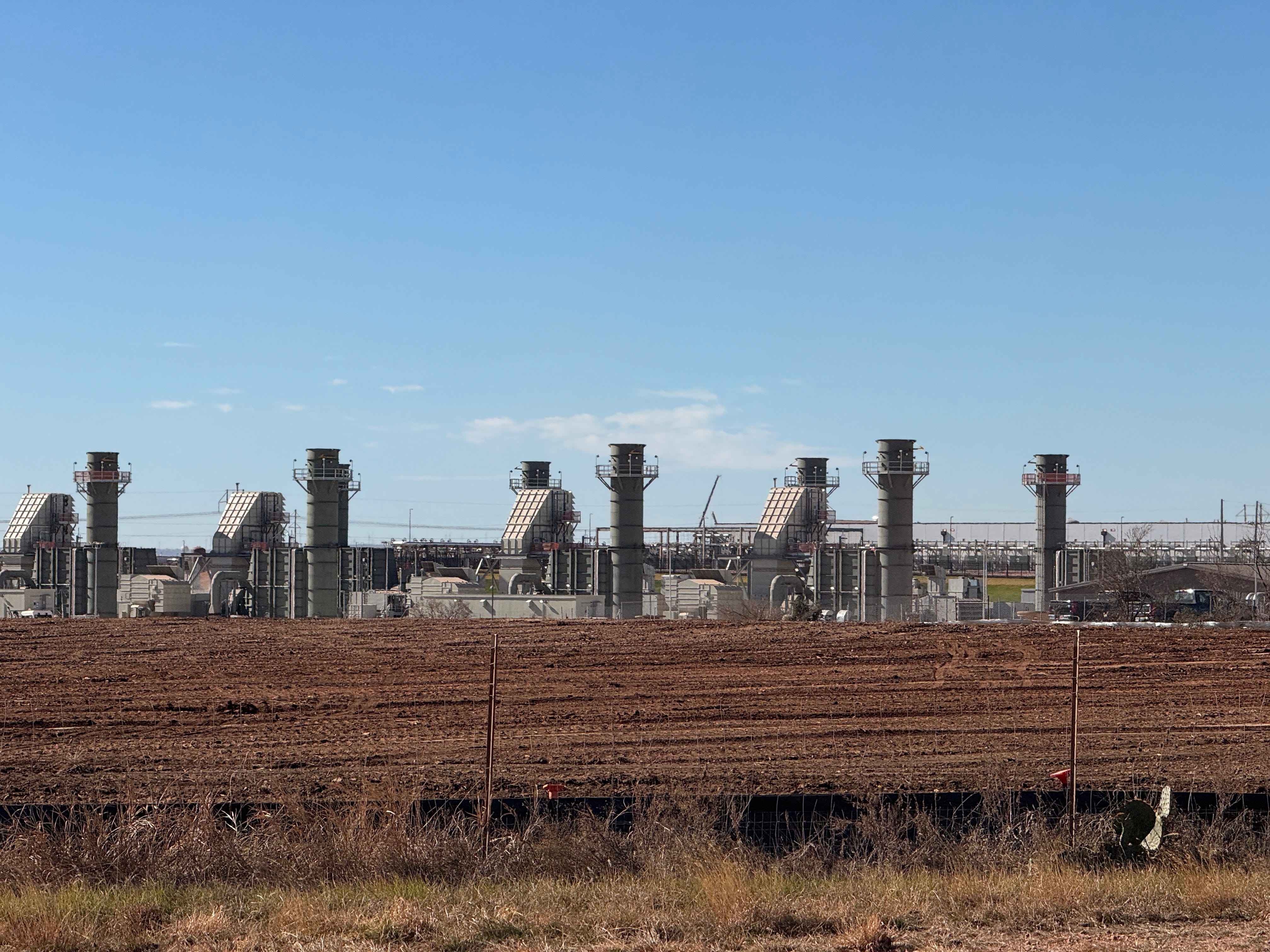
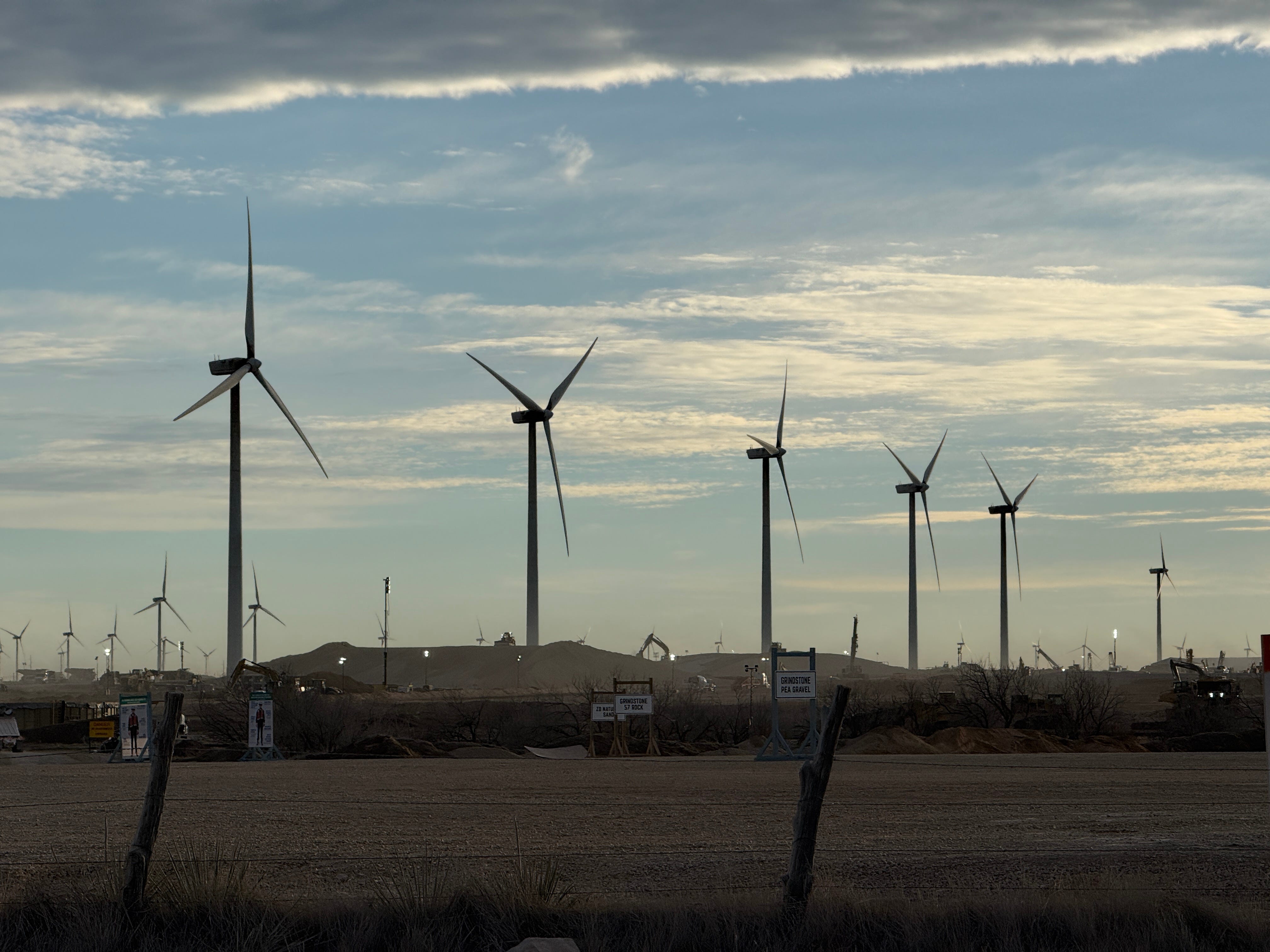
The first began ramping up last year. It’s visible in the distance from the ring road that circles the city.
It took two days to get from Richland, Parish, Louisiana, the last stop on our data-center adventure this month, driving through suger cane fields in Southern Lousiana…

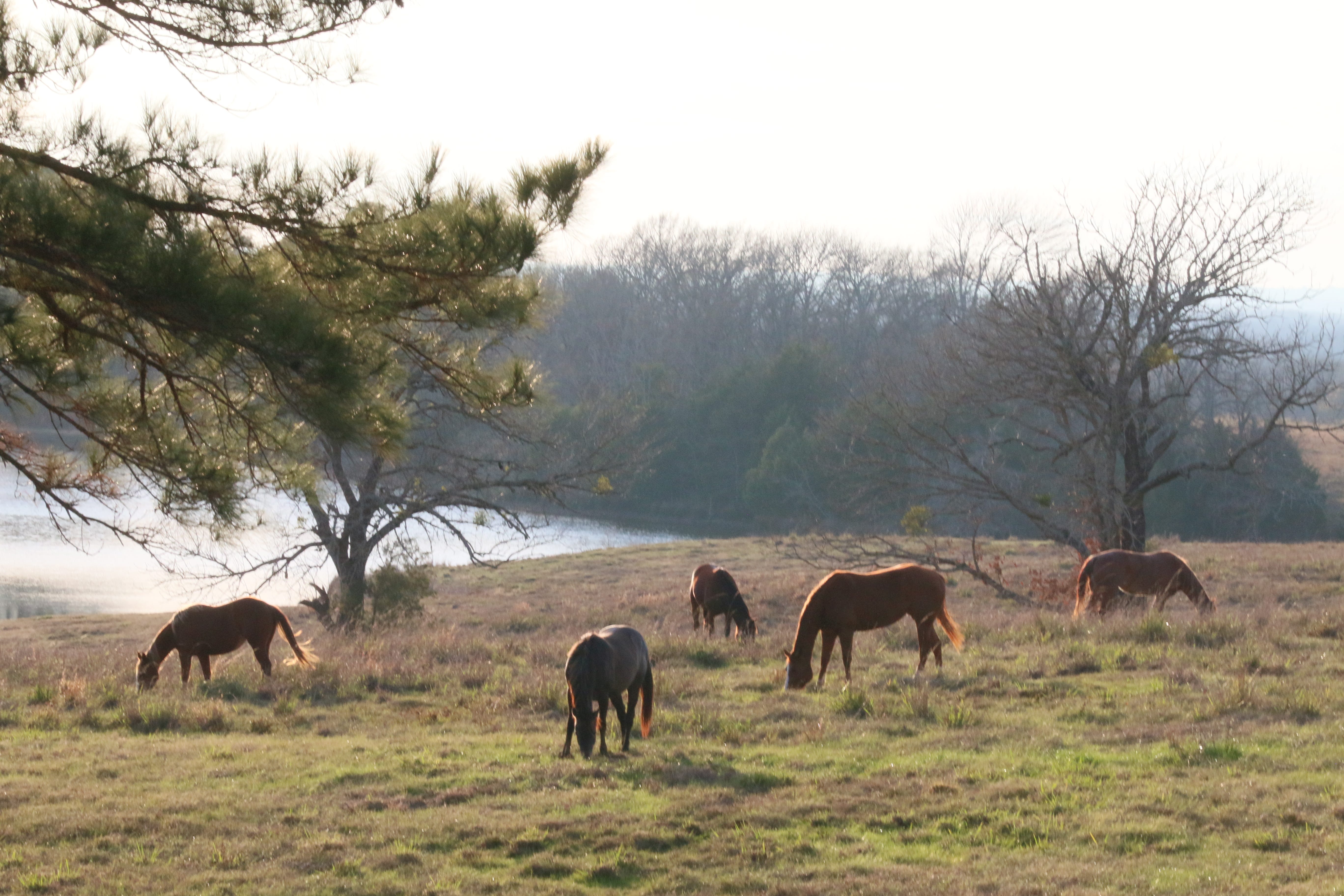
…. past ranches in east Texas…
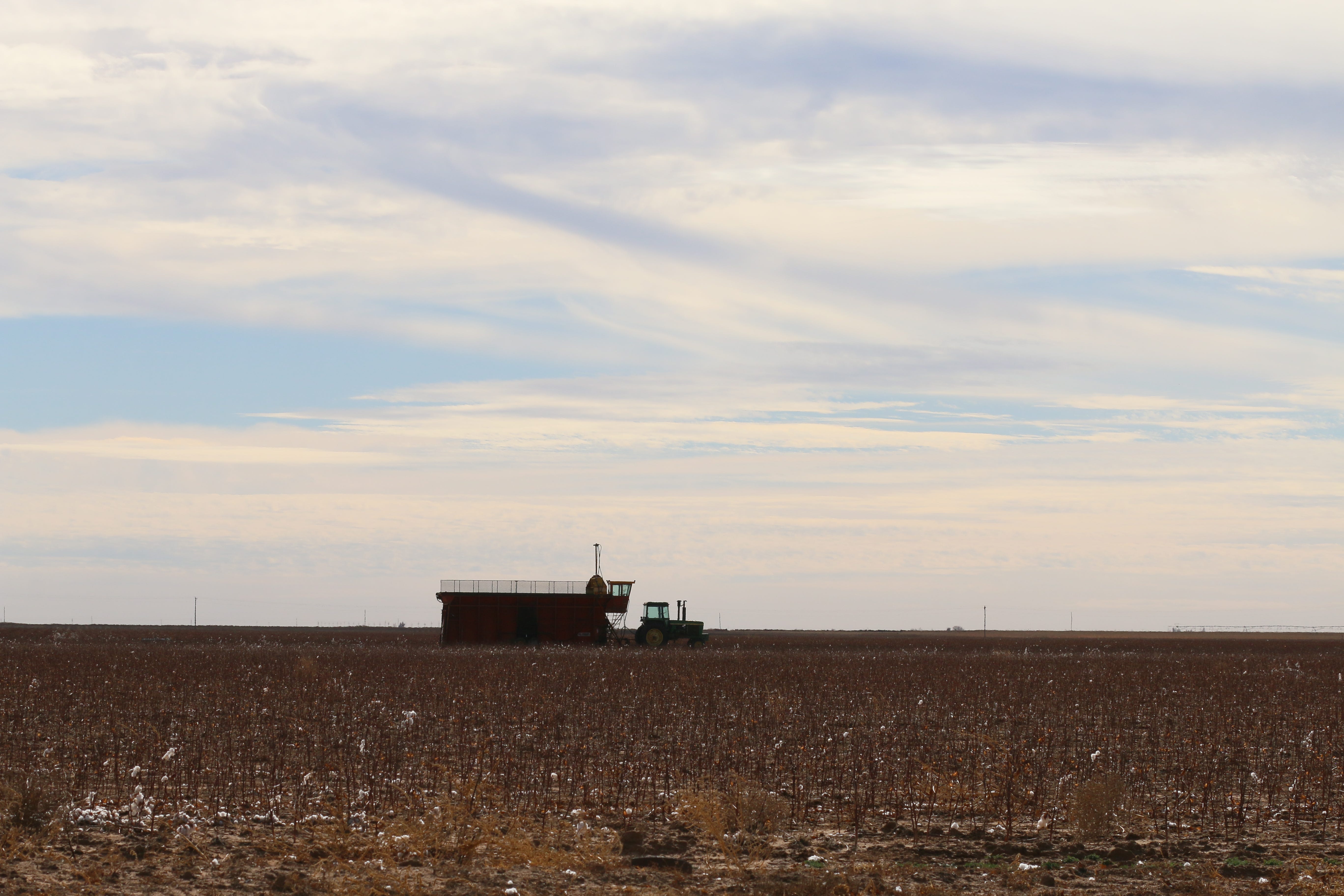
…and cotton plantations in West Texas…
Stargate Abilene is one outpost in a constellation of data centers that OpenAI founder and CEO Sam Altman is building across the globe with fellow billionaires Masayoshi Son of Softbank and Larry Ellison of Oracle.
Stargate is the most overtly ambitious international build-out of data-centers so far, with satellites already under construction in a half-dozen U.S. states and the United Arab Emirates in the Persian Gulf. There’s talk of a half-dozen more centers sprinkled from the U.K. to Japan, Norway to Argentina.
The project illustrates how thoroughly AI companies see their product spreading around the world, transforming every corner of human existence.
In Texas, Stargate underscores how these goliath data centers are spurring a rethink of the whole power system — how electricity is produced, distributed and consumed. Depending on how it plays out, this could make or break the promise of artificial intelligence, send electricity bills into the stratosphere or cut them, address climate change or accelerate it.
This rethinking matters especially because electricity will increasingly be our go-to source of energy as the digital age subsumes our lives — from communications (our devices) to transportation (those driverless cars and trucks) to manufacturing (robots) to fighting wars (with drones and satellites).
Data centers are the brains and nerve centers of this fast-expanding digital civilization, storing, analyzing and acting on ever more information scooped up from the real world, linking our digital and physical lives ever more tightly.
We’ve witnessed how Elon Musk’s xAI Colossus project has been a willy-nilly scramble for instant electricity. We’ve seen how Mark Zuckerberg’s Meta Hyperion project has been mostly about building more giant gas-fired power plants in the traditional fashion. Stargate, on the other hand, is concocting a new formula for power delivery for elephantine electricity users like itself, one that could become a model.
Like Colossus and Hyperion, this also starts with natural gas generation installed on site to get up and running. But Stargate aims to not only connect to the grid, but also orchestrate its on-site generation more deeply, and far more dynamically, than data centers usually do.
Critical to this approach are the folks at ERCOT, the Electric Reliability Council of Texas. They operate nearly all of the electricity transmission and delivery in Texas, the only state with a grid entirely within its own borders, largely insulated from the needs of other states and interference from the federal government.
That’s helped the state build what may be the world’s most competitive, market-driven power system. It’s also encouraged experimentation with all types of energy, including huge amounts of wind in the early 2000s and massive amounts of solar power since 2015. Most recently it’s been introducing industrial-sized batteries to soak up renewable energy when it’s cheap and discharge the power when the wind dies off and sun goes down.
Coal has suffered from the competition, while natural gas has still managed to grow, though not nearly as fast as wind, solar and batteries. Overall, coal and natural gas still account for more than 60% of electricity generation. But last year, 80% of new electricity growth came from wind, solar and batteries.
To take advantage of diverse power sources — strong winds at night and blazing sun on hot summer days delivering free electricity, natural gas turbines ready to go when needed though requiring the purchase of natural gas, coal and nuclear plants that run 24/7, though also at a cost — ERCOT has learned to be flexible juggling.
This is no small task for any grid, since supply must exactly match demand at every second or blackouts result, endangering lives, pissing off customers and riling up politicians that ultimately control these systems.
Now ERCOT is experimenting with a new recipe to manage skyrocketing demand from hundreds of data centers flocking into the state: more flexibility, this time for energy consumers, starting with energy hungry data centers.
This is a sea change even for the nimble Texas grid. With limited exceptions, grid operators simply try to predict how much electricity is needed when, then build what they must to meet that demand. Customers pay for the build-out, as well as whatever coal, natural gas or nuclear is needed to make the electricity.
The result, traditionally, is a system sized to comfortably meet a few hours of peak demand each year — thus one that sits significantly under-used the rest of the time. Customers are paying for capacity that isn’t needed most of the time.
Could data centers pay for that under-used capacity without making the peaks worse? They could, but they would have to be flexible.
Being flexible may be an even more radical idea for a data center than a power grid operator. Most are legally contracted to operate 99.999% of the time. That’s the “Five Nines,” which translate to no more than five minutes a year without power to keep the chips humming.
But there’s one thing even scarier to these tech companies as they compete to make fortunes and change the course of humankind: not being connected to the grid at all, or for a very long time.
And that is the situation they presently face, particularly in the U.S. Wait time to connect to grids ranges from many months in ERCOT to many years in less-nimble grid regions. Grid operators, never ones to act fast, need to study every aspect of these giant new loads if they’re going to be treated like any other customer demanding power as needed.
The two sides — frustrated tech companies and put-upon grid operators — are coalescing around a deal: Data centers dial back consumption during peaks in exchange for getting connected to the grid fast.
A Duke University study last year argued that just a few hours of flexibility each year could immediately open lots of grid capacity to data centers willing to pay for electricity during when capacity exists and at least partially dissapear when it doesn’t.
That’s where Stargate appears to be headed in Texas, and where the industry may be going, too.
This promising pact could hold down electricity bills by bringing in additional paying customers without requiring nearly as much new build of power plants.
Once grid connected, Stargate could relegate much of the on-site natural gas generation it’s building to power itself when the grid is busy. The rest of the time it would pay for grid capacity that wouldn’t otherwise be used.
That’s the direction Stargate Texas is heading, and it opens up another crucial avenue to meet stupendous data center demand while addressing climate change.
While data centers themselves don’t operate well on renewable energy alone — it’s far too variable and requires far too much space to build on-site — connecting them to the grid in this way could encourage massive new development in renewable energy, which grids are increasingly proving they can handle.
We’ll look at this phenomenon on our next stop, further into the Texas Panhandle, where Google is building its own pair of massive data centers — with the help of a renewable energy company it recently purchased.
Sounds like a pack of lies ☝️
No mention of the hundreds of people who froze to death a few years ago because ERCOT is utterly corrupt and inept