
First Stop, Colossus.
The xAI Memphis project raises the question: how fast is too fast?

“Move fast and break things,” was once Silicon Valley’s motto.
Now it’s “speed to power.”
This new framing of “fast” hasn’t outright broken things just yet. But stresses on the energy system are skyrocketing, particularly in America. So much so, they’re beginning to tear at the broader political and social fabric of the country.
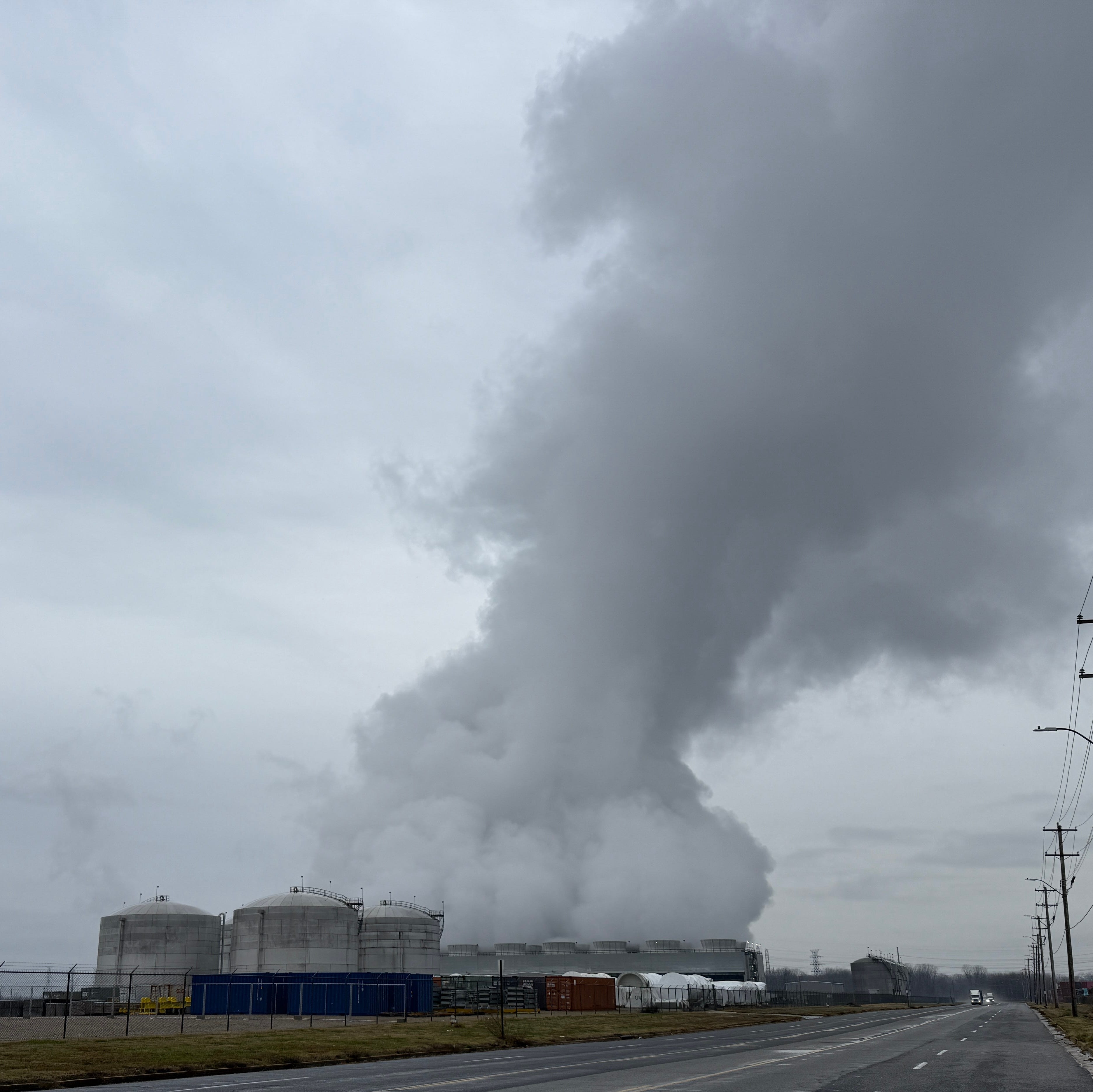
That was evident from the first stop of our data center tour: Elon Musk’s xAI Colossus in Memphis. Colossus is indeed colossal by traditional data center standards, though far from the biggest these days. The first phase — Colossus I — is up and running in an industrial zone in South Memphis, adjacent to a large Tennessee Valley Authority natural gas-fired power plant and next to a manufacturing plant.
Not far from Graceland, actually.
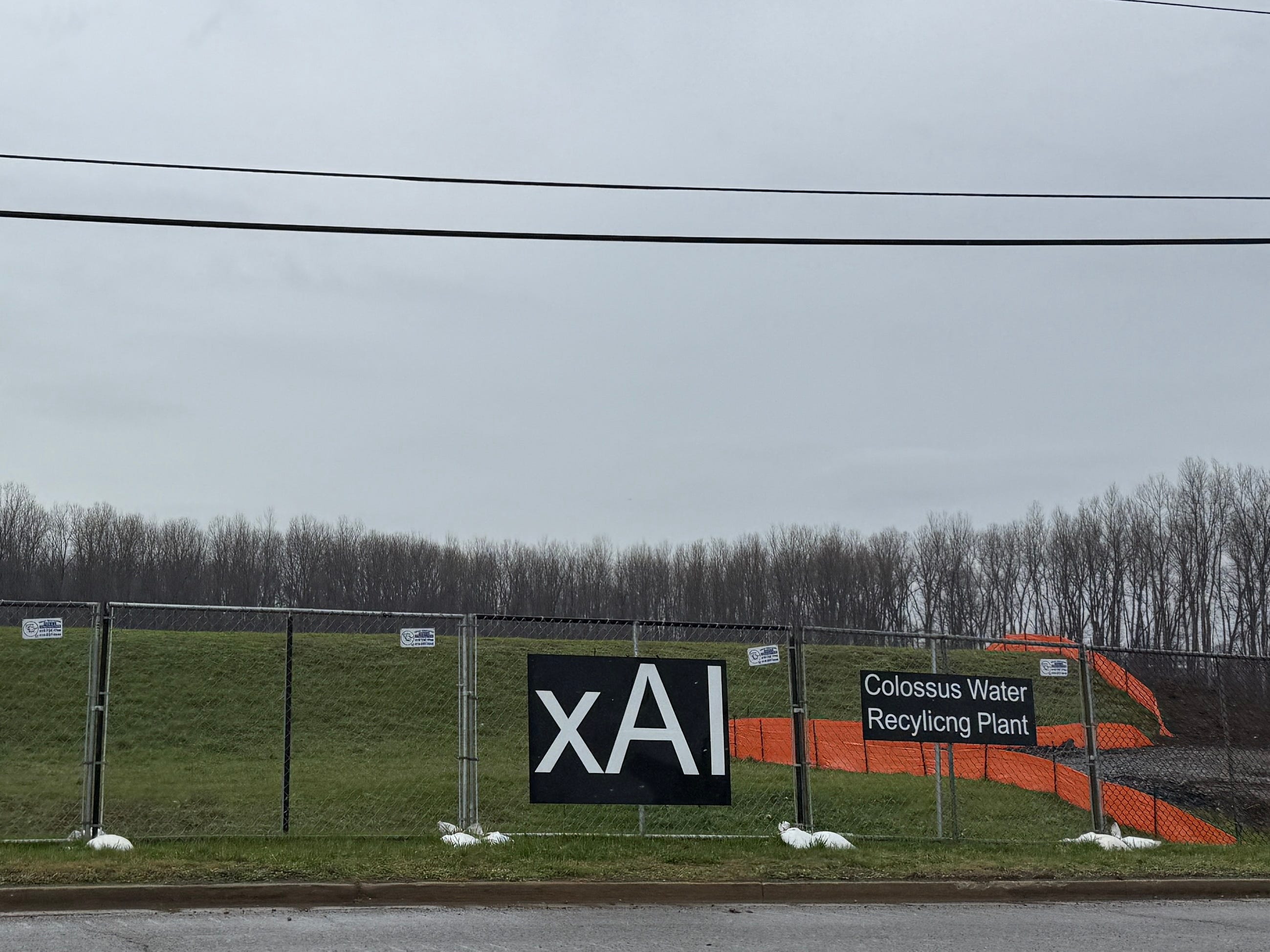
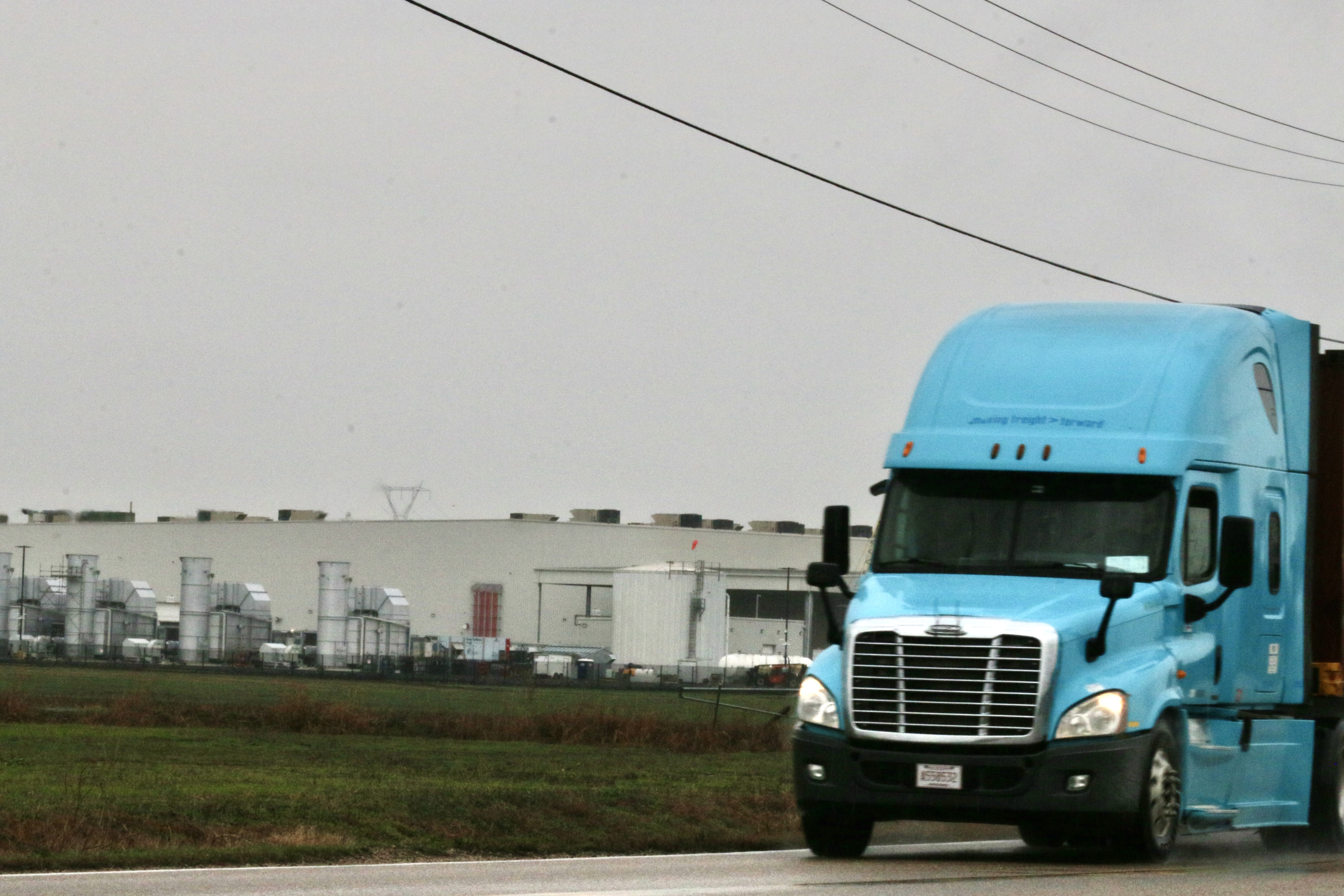
Here’s a photo I took from a public road outside the fence line, the closest I could get to these project sites in my weeklong journey from Memphis to Amarillo, Texas.
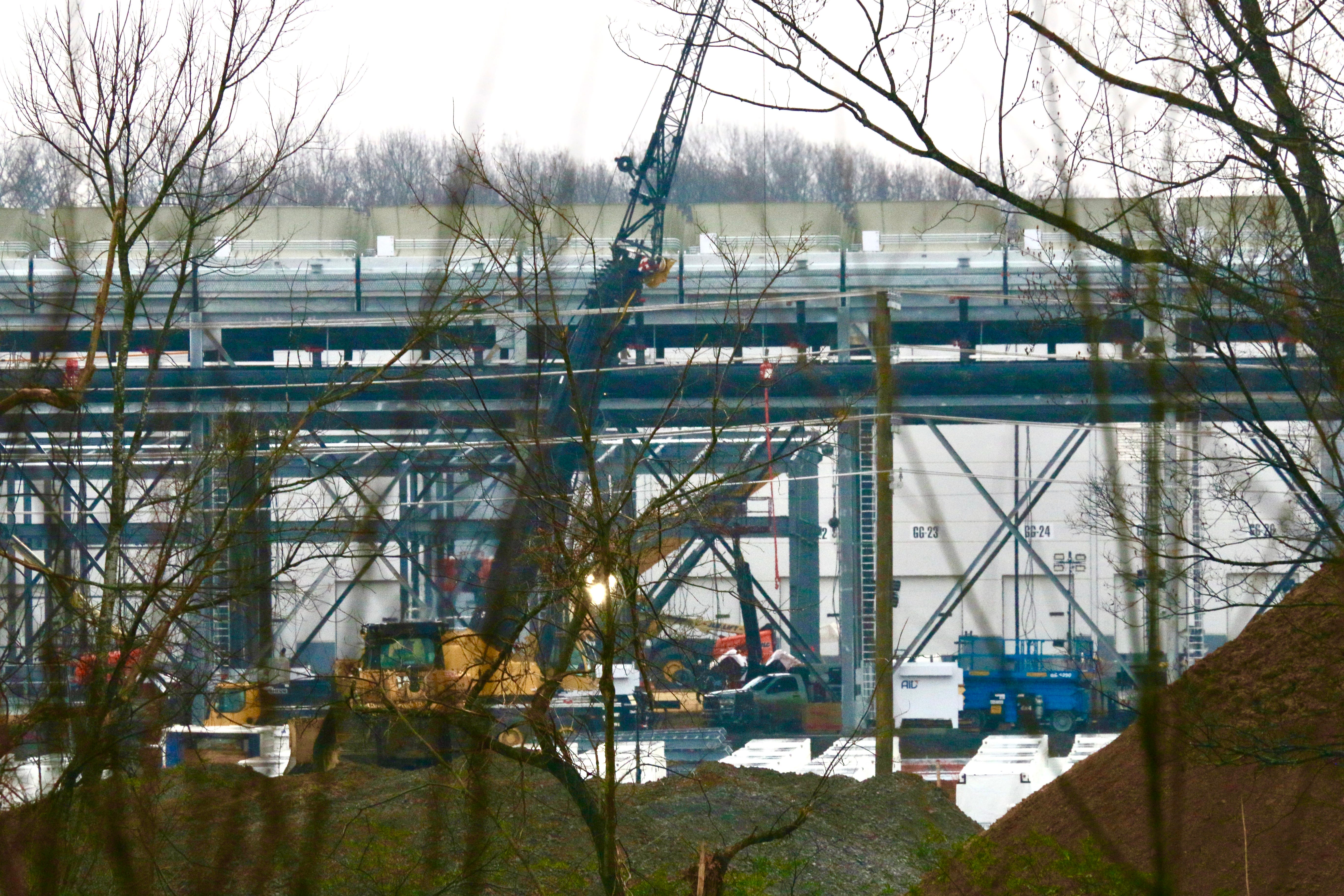
Here’s what construction at the second data center — Colossus II, planned to be about double the size of Colossus I — looks like. This site is just a few minutes drive away, also in South Memphis, right on the border of Mississippi. Last year, xAI also bought an idle power plant a few streets away on the Mississippi side of the border, and then announced yet another data center about the size of Colossus I, which Musk dubbed MACROHARDRR.
When I was an energy reporter for The Wall Street Journal, I often joked that covering energy was like covering air. Nobody thinks about it until there’s not enough.
Well, these days there’s not nearly enough, especially if you’re in the artificial intelligence business.
Electricity has become the single most important and hard to get ingredient for creating artificial intelligence. Sundar Pichai, the head of Google’s parent company Alphabet, Mark Zuckerberg at Meta, Andy Jassy at Amazon, Satya Nadella at Microsoft, Sam Altman at OpenAI, Dario Amodei at Anthropic — the whole AI pantheon — they’re all obsessed with this right now.
These companies suddenly find themselves, more than anytime in human history, engaged in the business of directly turning electricity into real-world intelligence, or at least a revolutionary new sort of all-purpose computing.
These companies have tons of money to do this, making them some of the biggest and fastest growing energy consumers in the world, and especially the U.S.
They’d prefer this power yesterday. But they can’t get all they want today, tomorrow, next year or even by 2030.
That’s partly because they’re competing with everything else we already need energy for — manufacturing things, heating our homes, powering our appliances — as well as new things like charging the growing number of electric cars. It’s also partly because the U.S. power system hasn’t expanded much in recent decades, as almost no one saw this coming.
For the titans of tech, more power faster means hundreds of billions more in revenues. They’re also convinced speeding to scale is the only way to win the race for a sort of AI holy grail, so-called artificial general intelligence, or AGI. This is a sort of vaguely defined computer super-intelligence, a digital capability far beyond anything the human brain, or even all human brains together, can muster.
For now, though, they’re having to settle for as much power as possible as fast as possible — speed to power. That means either ad-hoc additions to the energy system, gobbling up any existing grid capacity they can find, or some combination of both.
So far, the master of faster is Musk.
He announced the Colossus project in March of 2024, a time when xAI was widely seen as trailing in the race to build AI. He chose the site of a closed appliance factory in an industrial zone because it had some of what the company needed, including an existing connection to the local electricity grid. In Musk-like fashion, the data center — likely being used to train xAI’s Grok artificial intelligence model — was switched on three months later. That’s way faster than the year to 18-36 months even fast-tracked projects like these usually need.
Plugging into the local grid — the way electricity consumers usually get the stuff — wasn’t nearly sufficient to make this happen.
To get more electricity quickly, Musk snapped up dozens of gas-fired electricity generators and deployed on the site, for xAI’s exclusive use. These kinds of generators are generally used to provide back-up power for short periods of time. They’re far less efficient, considerably more polluting, and emit far more greenhouse gases than the industrial scale, combined cycle turbines designed to meet electricity demand of this size. But small generators had a big advantage: they could be delivered almost overnight, then strung together and run continuously to provide xAI more electricity immediately.
Critically, xAI sidestepped a regulatory air-quality review by using what it describes as mobile generators. They do have wheels, as you can see here:
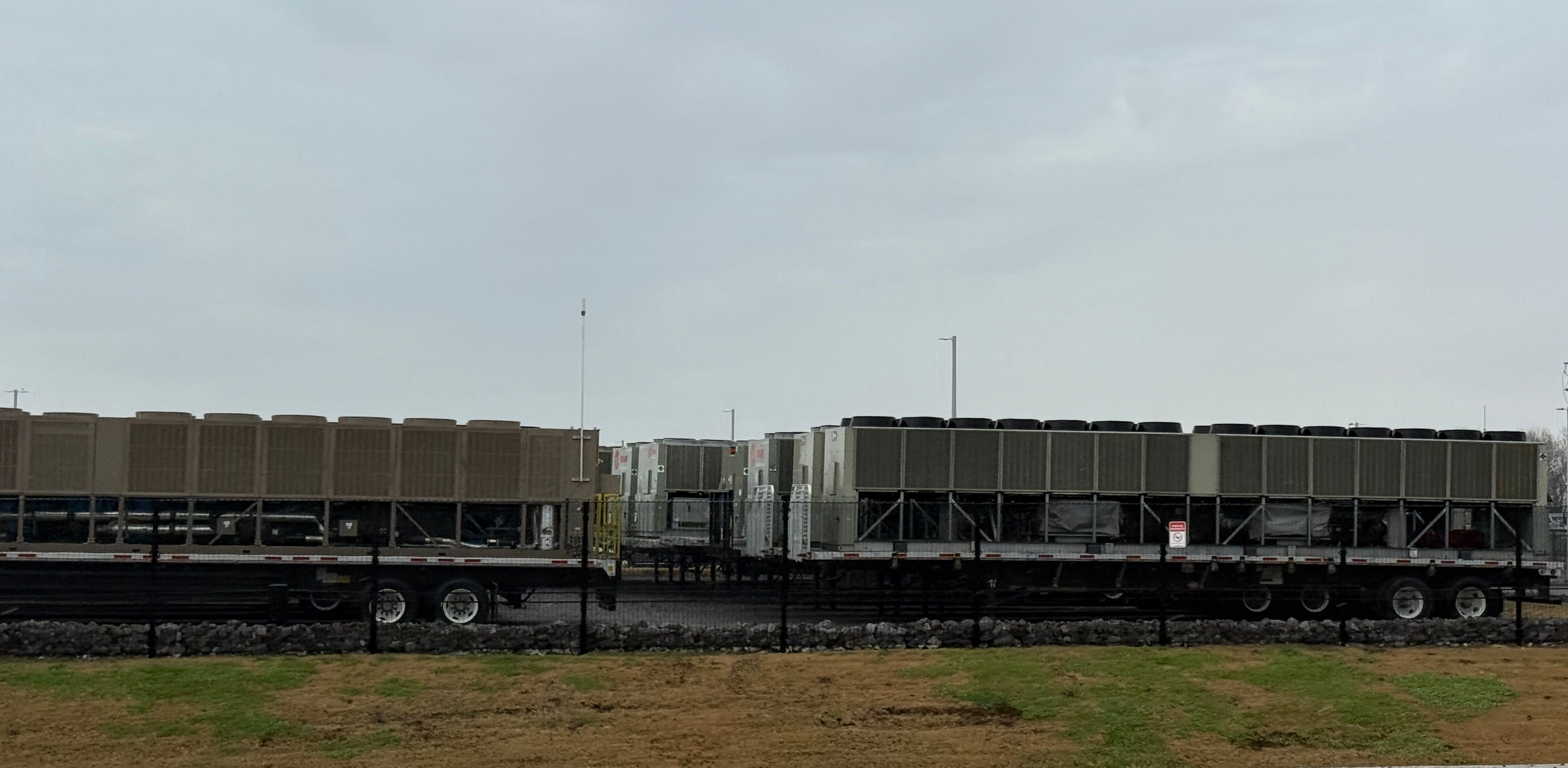
Local regulators say those don’t require a review — even though the machines are the size of semi-truck trailers and have never really been used in this way before — unless they’re deployed for more than a year. Local authorities provided a special permit for 15 additional turbines, exempting them from federal restrictions to run 24-7-365.
The Southern Environmental Law Center has taken legal issue with this arrangement on behalf of local residents and the NAACP.
The air pollution and emissions from these can be considerable. Here’s a video taken by the anti-fossil fuel activist group Oilfield Witness using a special camera that films the pollutants and release of methane, effectively unburned natural gas.
Officials from xAI have not publicly divulged exactly how they plan to power Colossus II and MACROHARDRR, other than use the Mississippi power plant it purchased and work with the usual traditional electricity providers, the Tennessee Valley Authority and Memphis Light, Gas and Water.
The main xAI official overseeing the project told reporters, “We’re copying and pasting” the plan at Colossus I.
This basic playbook — find existing power sources, preferably via the local grid, then add temporary on-site gas turbines and finally try to find a way to build more — has to one extent or another been taken up by many other data center projects.

What sets Colossus apart among the mega-projects is its proximity to residential communities. Boxtown, a historically black community founded by emancipated slaves during the Civil War, is the closest of these. Residents, who say they were almost completely excluded from planning for the facilities, have complained.
Beyond the neighbors’ air quality concerns, worries are growing that the project’s huge demand for electricity will compete with current customers, further driving up already rising utility bills. There’s also concern about the data centers’ huge demand for water — which data centers need for cooling — even after xAI has agreed to set up a dedicated water recycling operation for its data centers there.
Wendy C. Thomas, a local journalist with MLK50, has partnered with national investigative news outlet ProPublica to provide some of the best reporting on these issues.
Musk thinks the generators are worth it to train up Grok as fast as possible. City officials and the Greater Memphis Chamber of Commerce also see the project as a major economic boon, giving Memphis a shot at becoming the center of a “Digital Delta” in a region, the Mississippi River Delta, that has long struggled economically.
Meanwhile, now trained up and running from Colossus for more than six months, xAI’s Grok has created, among other things, several controversies. One was a chatbot that dubbed itself MechaHitler and argued for a “second Holocaust.” Then came an image generator that digitally disrobes real women and children and displays the images on their own X social media accounts without their consent.
Thus we have here in Memphis one of the signal challenges of the AI power build-out: the perceived benefits of AI being outrun by the costs of rushing these gigando facilities into existence — air pollution, greenhouse gas emissions, overuse of water resources, and rising electricity prices as tech-bros are seen snarfing up all the available energy in sight at the expense of every other customer.
Things get especially dicey when one of the most-touted “benefits” is boosting corporate profits through the elimination of whole categories of jobs, particularly entry level jobs for young people.
At this point, these are still mostly perceptions. But perceptions matter when it comes to getting things approved and moving them along. And once fixed, perceptions won’t turn around easily, at least until artificial intelligence actually does cure cancer, solve climate change or demonstrate the higher social value its proponents have raised hopes for.
Other AI giants have been more sensitive to these downsides of the artificial intelligence frenzy. As we’ll see, they’ve also picked sites further from populated areas, moved a bit more deliberately and tried to appear responsive to growing public concerns about artificial intelligence.
Still, they’re racing ahead, too.
To a company, they’ve backburnered climate goals and to varying extents even air pollution concerns. For now, they’ve seized on natural gas in whatever form they can get immediately — including modified jet engines and fuel cells not long ago dismissed as outragously expensive — as the solution for now.
They see this as temporary response to a historic moment until other paths to power present themselves, whether that’s advanced nuclear reactors, geothermal power from beneath the earth, futuristic fusion energy or…more natural gas.
What they’re only just beginning to reckon with is that none of those options sustainably solves they’re going to have for at least a decade to come. For that, they’ll need lots more grid power, lots and lots more. And the cheapest way, the only way right now, to get lots more grid power fast is…renewables.
The data center buildout is just getting started, and the tech giants are maneuvering on the fly. They may no longer boast about breaking things.
That’s not to say there’s no break point.

.