Data Center Domination
Dominion Energy’s Virginia corridor is NextEra’s target.

This post continues a series looking at the proposed mega-merger between NextEra Energy and Dominion Energy to form the largest utility company in the U.S. The proposed pairing opens a window on nearly every major development in the U.S. power industry, especially impact of artificial intelligence.
Read the earlier posts first if you haven’t yet. They build on each other.
So far, we’ve looked at the importance of electricity in the future of energy and the energy transition. We’ve explored the complexity of the current moment in the U.S. electricity system. And we’ve traced the history of NextEra’s core regulated utility business, the company’s Florida Power & Light division, to understand how the utility monopoly came into being, why, at times, it’s been able to meet growing demand for electricity while pushing down the price of power — or at least keeping it in check — and why, at other times, it has not.
In this post, we look at the history of the other party in the proposed merger, Virginia-based Dominion Energy, the pioneering role technology has played in its growth, and how the company now finds itself at the forefront of the energy future.
As we saw, Florida made a cameo appearance in the development of one early use of electricity — the incandescent light bulb — thanks to its inventor wintering there.
Virginia, it turns out, was the stage for another use of electricity: street cars. Richmond, the state capital, hosted the country’s first commercially viable electric-powered trolley, ten cars that began operating in 1888. The city of Boston soon copied the system, then other cities. Within a little more than a decade horse- and ox-driven street railways were a thing of the past.
Take note: Technological innovation again drives electricity demand. This is where Virginia has made its mark today, as well.
Early on, companies combining railways and power generation emerged in the state. The Virginia Railway and Power Co., an operator of streetcars owned by a son of Gilded-age tycoon Jay Gould, purchased another firm that had grown by merging canal and river transport with hydroelectric power stations in 1925.
From there, the region’s power industry followed a path not unlike that of Florida — constituting and reconstituting in various corporate guises while growing steadily through the 1960s with population and the burgeoning use of electricity in everyday life, from washing machines to air conditioners.
Dominion came into being in phases through the 1980s, and eventually established a territory that included much of Virginia — most fortuitously, northern Virginia.
It was there the infrastructural manifestation of a new technology taking hold in the 1990s — the internet — reshaped Dominion’s fortunes. Data centers, the big, windowless, boxy buildings housing racks of computer chips are now transforming the power industry every bit as thoroughly as the light bulb and electric-trolley.
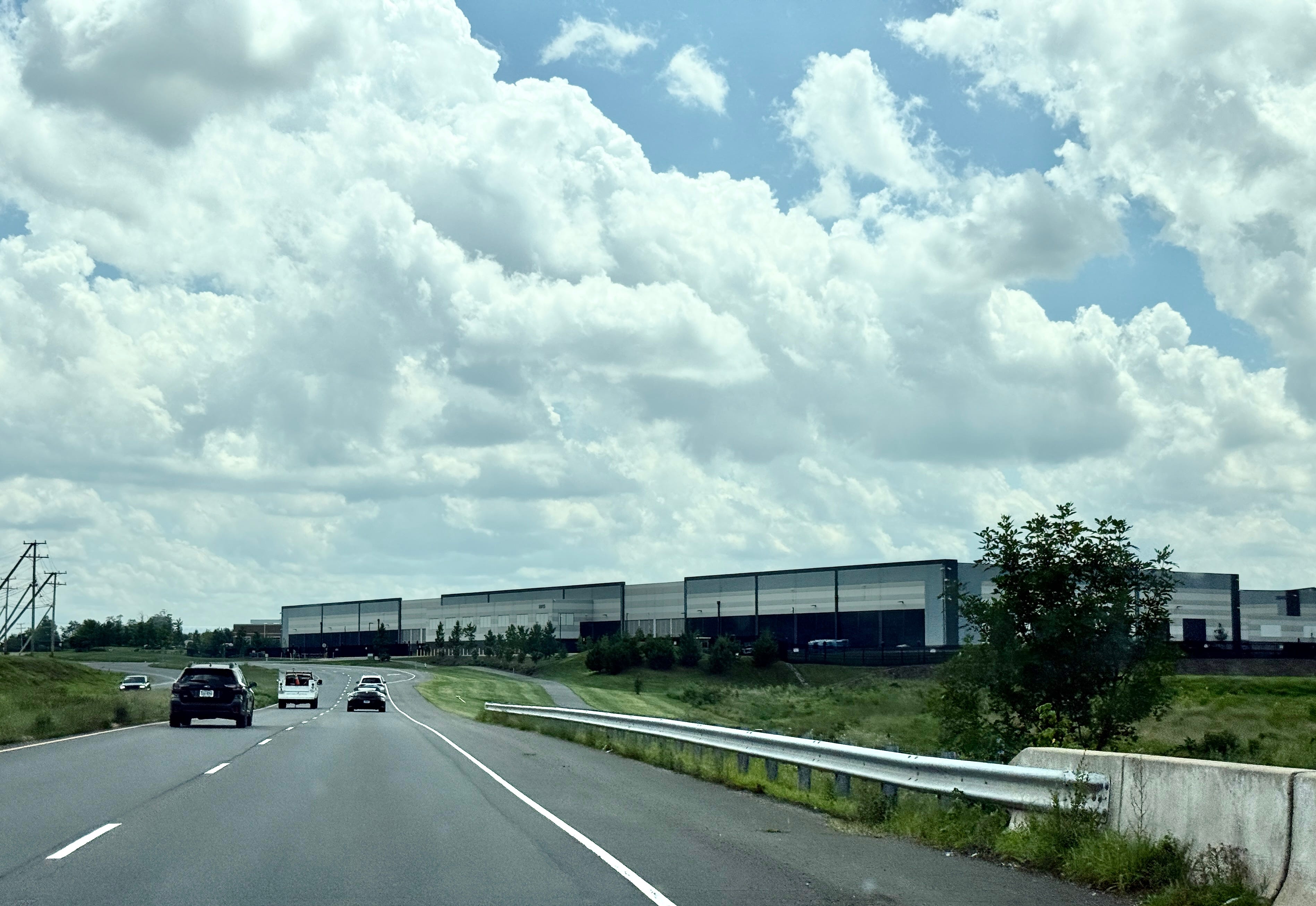
Data centers began springing up in the empty, undeveloped agricultural tracts of Loudoun, Prince William and Fairfax Counties. They were first established by some early private investments in the communication systems that underpinned the internet, including heavy spending by the storage and computer-processing needs of fast-growing America Online, or AOL, which was based in northern Virginia.
The data center boom was further spurred by the Virginia state government, which waived taxes on the sophisticated equipment they purchased.
As of 2024, more than two-thirds of the world’s internet traffic flowed through the data centers of Virginia’s “Data Center Alley,” where about one-third of the world’s largest clusters were located.
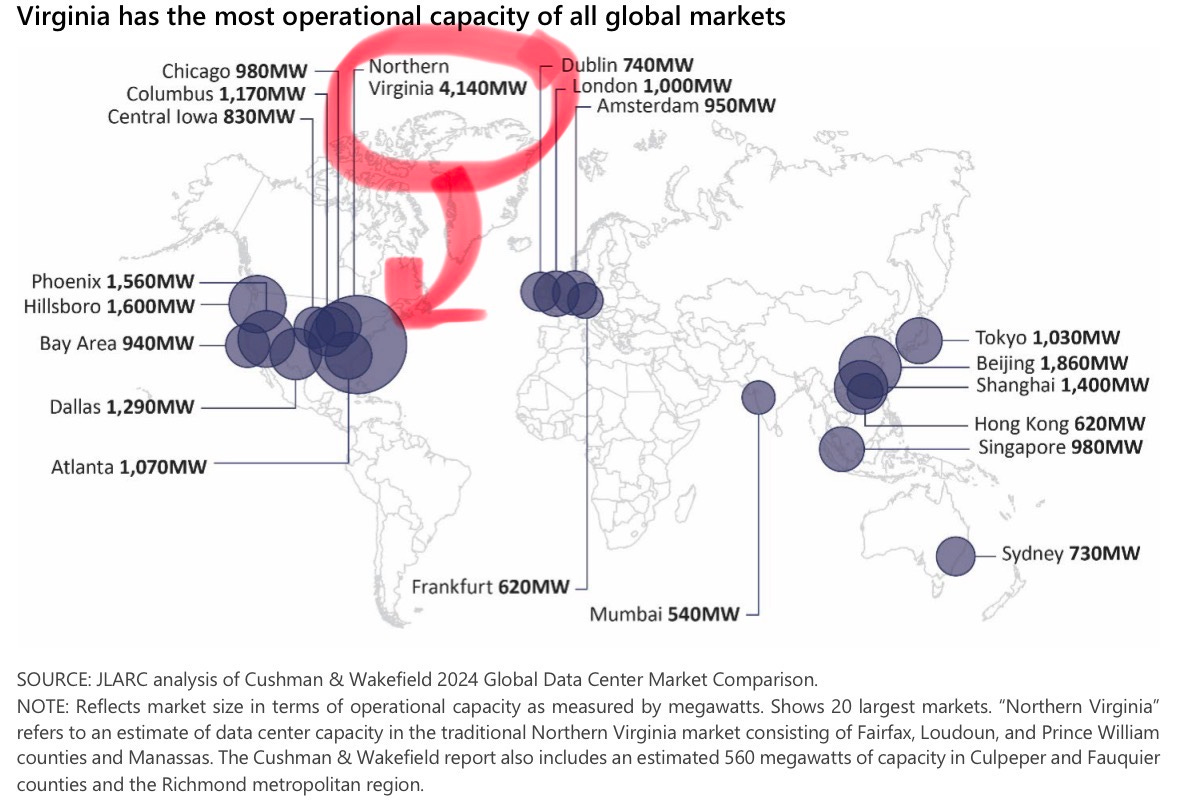
The size and scope of these facilities — sprawling, humming clusters and campuses thick across northern Virginia — is generally measured by how much electricity they use. For good reason: they use a lot of energy.
Northern Virginia dominated this global buildout. At more than 4,000 megawatts, the industry in these three counties is more than double the size of the next largest cluster globally, in Beijing on the other side of the planet, and three times the size of the next largest in the U.S.
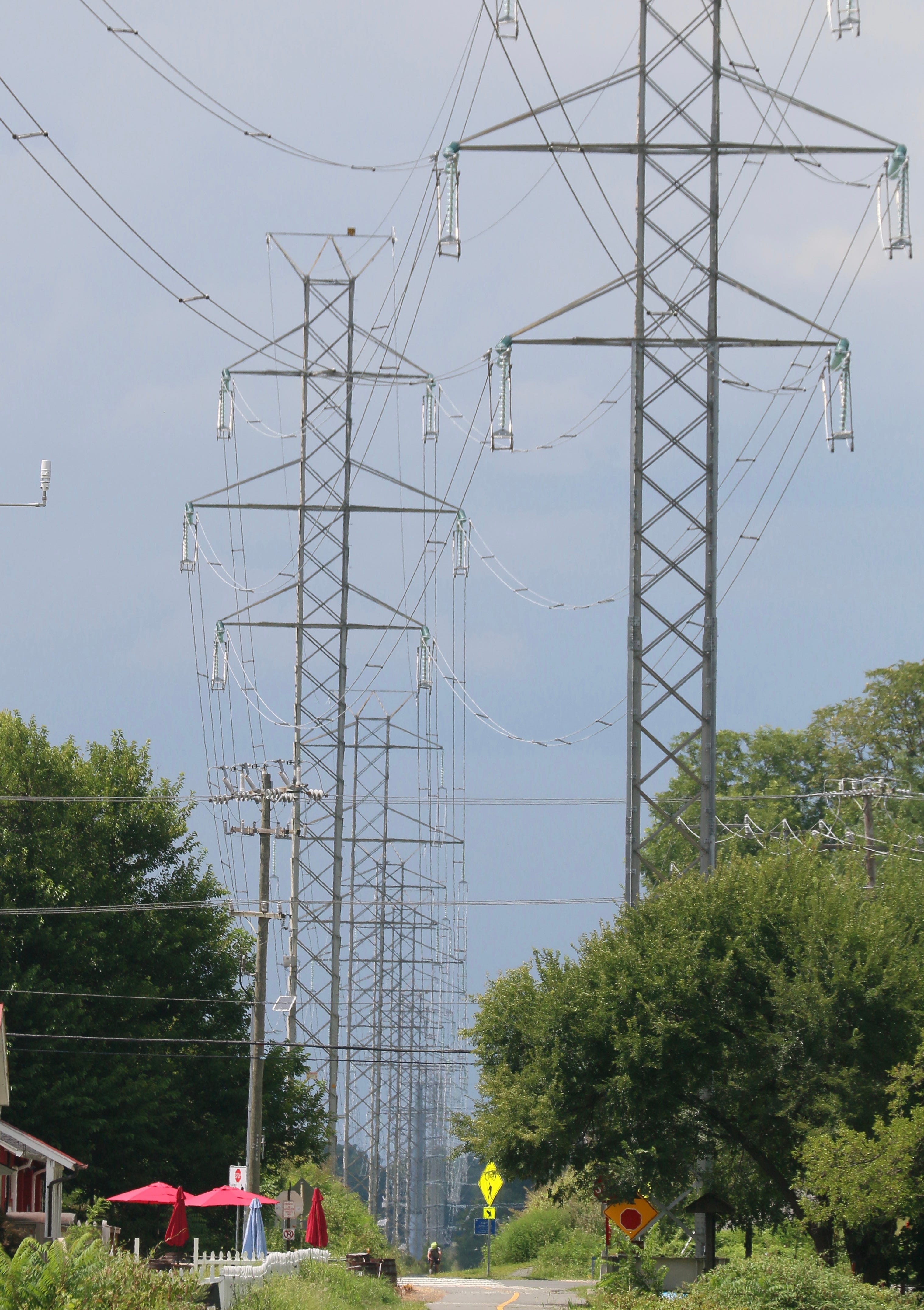
Dominion serves up almost all of this power.
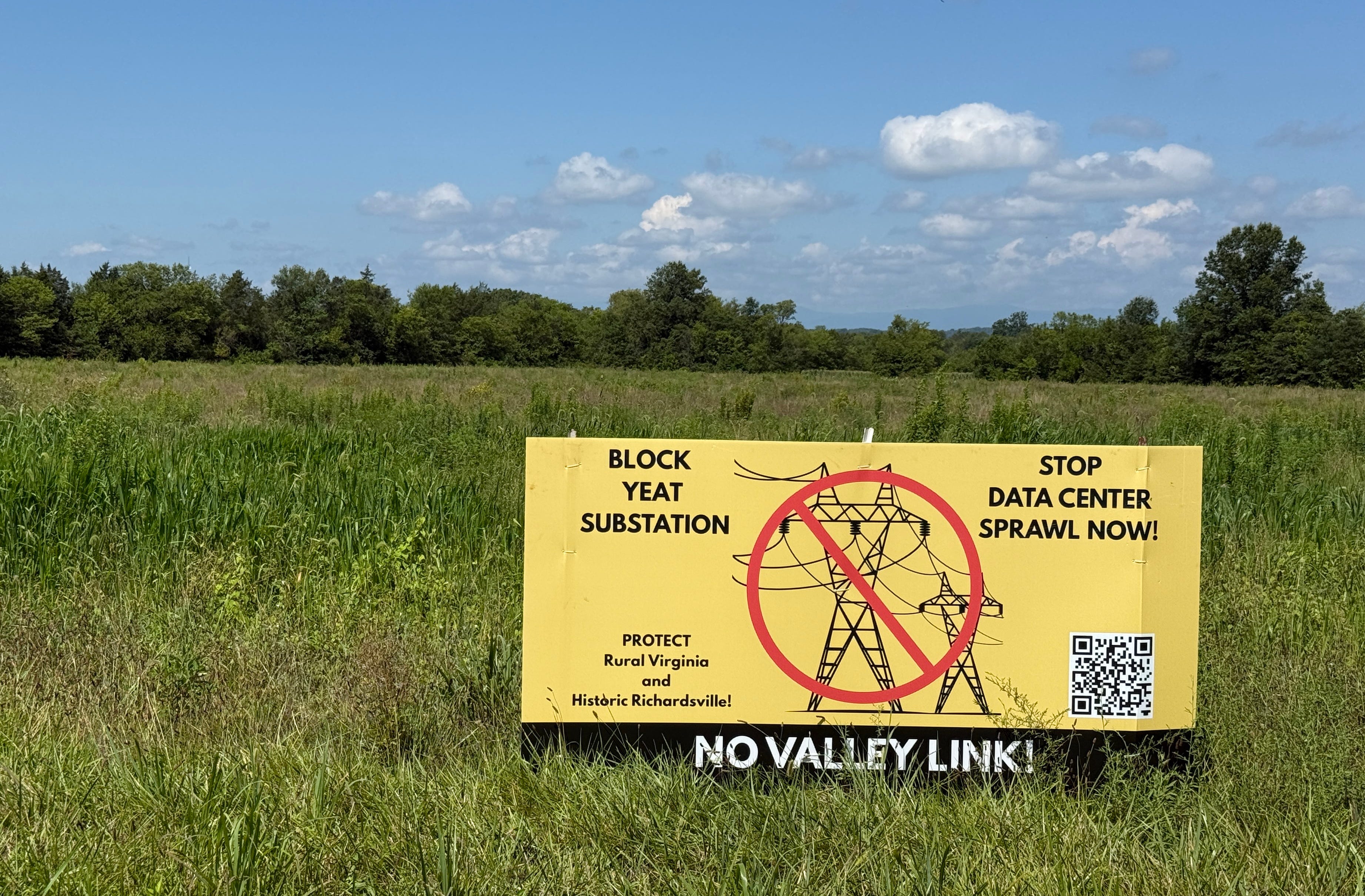
Data centers have stirred up a hornets’ nest of opposition lately, including in Virginia. But for decades, they were welcomed in Virginia even as they proliferated.
They became a major revenue source for local government, and thus a wellspring of benefits for the residents of the three counties. Loudoun County, especially, leaned heavily on revenues from data centers. The county draws about one-third of its tax revenues from data centers, approaching a billion dollars annually.
Despite the state government passing up sales tax revenue, benefits from data center construction, especially, flowed through the economy. One study put the numbers at 74,000 jobs, $5.5 billion in labor income, and $9.1 billion of gross domestic product annually, between the state’s fiscal years 2021-2023.
Data centers don’t just use a lot of energy, they use it all the time, regardless of weather, season, or time of day. They’re always on, and mostly maxed out. That’s fundamentally different from other electricity uses, which tend to rise and fall from day to night and spike during summer heat waves and winter cold snaps.
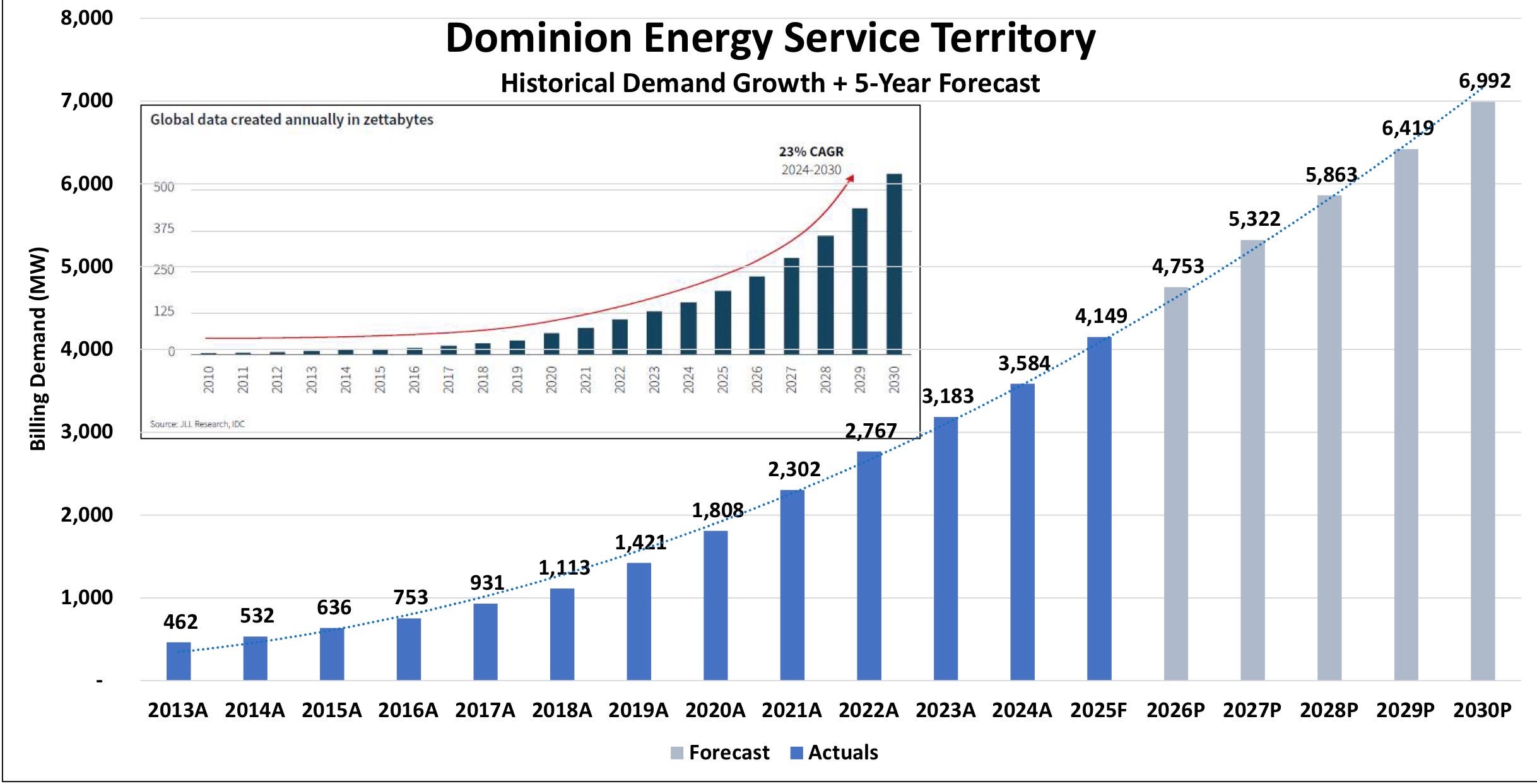
This steadily growing, always-on demand — combined with other new demand from electric vehicles and factories — is pushing up electricity prices in Dominion’s Virginia territory. Prices there have run 12% to 41% above other regions on the same electricity grid. They’ve jumped particularly sharply this year as data centers are among the least responsive to rising energy costs, according to one analysis.
They don’t cut back, as some users do when prices rise. These systemic increases are working their way onto household electricity bills. Dominion has raised rates by 17% over the past year, according to MIT researchers at the Massachusetts Institute of Technology, which tracks electricity prices across the country.
Dominion expects demand for electricity to continue growing dramatically in its territory over the coming years, as you can see in the chart below. Most of that growth is expected to come from data centers, the company says.
So the NextEra-Dominion merger would bring together the U.S. utility most adept at maximizing the guaranteed profits with the utility expecting the most growth.
But the tidal wave of demand Dominion and NextEra see driving guaranteed profits is running into a wall of opposition against the very source of that growth.
Which is what we’ll look at next.