

A little over decade ago, as the Obama administration and Iran’s leadership began negotiating their ill-fated nuclear deal, I spent some time in Tehran hanging out with a popular musical band called The Pallet.
Their music was a kind of cross between Dixieland jazz and Iranian folk tunes. The band had raised the hackles of Iran’s hardline mullahs with a clever act of defiance.
Playing live secular music over the government-controlled airwaves was strictly banned under the ascetic interpretation of Islam enforced by the Islamic Republic’s dour clerical rulers. But the band, working in cahoots with a sly producer at the main government television station, appeared on a popular program “playing” instrumental versions of their songs — but airband style, without the instruments.
Fans of The Pallet loved it. So did legions of regular Iranians who’d never heard of the band but were sick and tired of theocratic restrictions on public life and personal behaviour.
The regime, less so. As one member of the band put it, they meant to throw a pebble in a pond but it turned out to be boulder. The show was taken off the air. The band banned from playing in public for a time.
You can see the video report I did for The Wall Street Journal at the time, including the television footage of the band fake-playing their instruments:
Looking back, the kerfuffle was a quaint, playful moment of push-back against Iran’s entrenched theocracy. The contrast with today highlights how high the stakes have climbed in a decade. Iran has careened from mass public uprisings and lethal regime crackdowns. The nuclear deal, struck with Iran by Obama, joined by Europe and even Russia and China, was abandoned by the first Trump administration. Israeli leaders cheered. Saudi Arabia and the United Arab Emirates quietly approved. Israel and the United States are at war with Iran — for the second time less than a year.
They bombed Iran last June in hopes of obliterating the country’s nuclear program, which they didn’t quite manage. Nor did the 12 days of pummeling from the air eliminate Iran’s ballistic missile program, which threatened Israeli cities and might someday be good enough to target the U.S.
Iran fought back, but not particularly hard. It launched a short, harrowing barrage of missiles at Israel, some of which caused death and destruction. It targeted U.S. military bases in the Middle East.
Supreme Leader Ayatollah Ali Khamenei must have hoped things would calm down. But in late December — six months after the bombing attacks — some of the largest ever popular demonstrations against the regime erupted across Iran.
There was nothing playful about these.
Millions of angry Iranians, many from the working class, shouted insults at the country’s top officials and fought security forces in the streets. These were Iranians suffering from the government’s grotesque mismanagement of the economy or frustrated that the regime’s overseas adventures and international intransigence elicited military attacks that had worsened their plight further.
The regime gunned down tens of thousands of them indescrimanately, without remorse.
Still the supreme leader refused to relinquish a nuclear program that Iran has long claimed — to Western eye rolls — is not aimed at building a bomb. He wouldn’t dismantle Iran’s ballistic missile program. Even on its back foot, the regime still defied U.S. and Israeli pressure.
So Israel and the U.S. are back again with an even larger and more sustained bombing campaign. Donald Trump and Israeli Prime Minister Benjamin Netanyahu have made clear they hope to topple the regime, or, even better, clear a path for the Iranian people to topple the regime.
Ayatollah Khamenei and a coterie of senior clerics and military leaders are already dead, killed in the first wave of the recent Israeli and U.S. bombings.
But the regime has not been toppled. Far from it.
Ayatollah Khamenei, an aging leader at 86, has been replaced by his 56-year-old son, Mujtaba, as supreme leader. The Iranian National Guards Corp, the Islamic Republic’s military, appears to be wholly intact. Coordination between its units and communications along its command chain may be disrupted, but it’s still fighting back.
By conventional measures the IRGC is wildly outmatched. But it’s scrappy and ingenious, and its back is square against the wall. The regime isn’t necessarily losing a war in which surviving equals winning.
* * * *
All this has left Iran’s 95 million people — a nation of diverse ethnic and religious backgrounds, cosmopolitan elites, urban laborers, small businessmen and rural farmers, almost all of whom have been suffering under the regime’s oppression and incompetence for decades — in a very tricky spot.
I once traveled to the interior city of Yazd to attend a fire festival held by the local Zoroastran community.
Zoroastrianism is one of the great religions of ancient history — the world’s first truly monotheistic religion. It was the faith of the first great Persian empire, the Achaemenids whose kings — Cyrus the Great, Darius I, Xerxes I — split time between their ceremonial capital of Persepolis and home in Pasargadae.
But Iran’s Zoroastrian community has co-existed uneasily alongside Islam since the Muslim conquest of Persia in the late 7th century. There have been periodic bouts forced emigration and acute repression, including since 1979.
Yazd hosts a Zoroastrian temple where a flame — fire is among the four sacred “elements” in the religion — has been kept burning continuously for more than 1,500 years.
Each year, thousands of Zoroastrians gather in what amounts to a huge celebration of the grandeur of Persian civilization. Persian culture, which long precedes Islam, is a powerful force of Iranian nationalism. The clerical elite of the Islamic Republic wants to claim and control that nationalism while disowning Zoroastrianism.
This hasn’t really worked. And the powers that be in Tehran had decided to go with the fire festival that year.
The festivities kicked off with a few words from Sepanta Niknam, the first Zoroastrian ever elected to the Yazd city council. Azim Zadeh, appointed mayor of Yazd by the central government in Tehran, attended the ceremony for the first time.
Zadeh sat in the front row of a crowd of thousands to hear hours of spirited recitation from Persian classics, especially tales from the Shahnameh, or Book of Kings, by the great Persian poet Ferdowsi, who lived in the 10th century.
Here’s the video report I filed for The Wall Street Journal from the festival:
On another trip to Iran I met Hossein Dehbashi, an Iranian film maker who had put together an oral history of the Pahlavi regime from pre-revolutionary Iran — the regime of the Shah before he was ousted in 1979.
Islamic Republic hardliners have done everything possible to wholly demonize the Shah’s rule, which was miserably flawed but did help bring Iran into the comtemporary world. But for the hardliners, praise for him, or anyone associated with his governance, is tantamount to treason.
Dehbashi’s lengthy, nuanced interviews with dozens of Pahlavi-era figures — government officials, statesmen and artists, many living abroad — were hardly uncritical. But he allowed his subjects to discuss what they saw as their successes and acknowledge failures on their own terms.
He invited them to talk about health care, economic development, the Shah’s foreign affairs policies and how they saw Iran’s place in the world when they were in power — all topics of intense current debate in Iran at the time.
He then opened the archive to the public, much to the consternation of hardliners — virtually none of whom were willing to be interviewed or take responsibility for the declining state of the country and economy.
He pointed to a photo gallery of interviewees on his wall and praised the former Pahlavi officials’ willingness to be questioned, to account for their failings.
“I can’t speak of all the former officials of the Pahlavi regime,” he told me. “But I personally admire these people because they were brave enough to participate in this project and expose themselves to be judged by history out of a sense of patriotism.”
Here’s my report for the WSJ on the Iranian Oral History Project:
I have no idea what’s become of The Pallet or where its members are today. I wonder how the Zoroastrian community is faring in Yazd. I heard a few years after my report on Hossein Dehbashi that he’d been threatened and perhaps even arrested by the regime. But I have zero doubt that the irrepressibility of these Iranians, and many more I met, is very much still out there, likely in spades.
The trouble is, all these Iranians were motivated by a love of Iran. They felt a strong sense of nationalism and deep pride in a civilization that includes Islam but also stretches back long before Muslims came to Iran, nevermind the long-curdled religio-political experiment that is the Islamic Republic.
Right now dissenters and critics can’t come into the streets and overthrow their oppressors — or even realistically demand change. Their country is under attack by an Israeli prime minister and American president who make them look like foreign stooges by calling them into the streets.
* * * *
For all its apparent fanaticism, the Islamic Republic has been shedding the first half of that name — the religious half — bit by bit over the decades since Grand Ayatollah Ruhollah Khomeini returned to Iran in early 1979 and was greeted by overwhelming, passionate crowds.
He set up a historically quirky form of theocracy that positioned himself, by dint of his religious authority, as the transcendent leader of the nation for all purposes — political, moral, economic, military.
The long Iran-Iran war — which ended with a dispirited Khomeini telling the nation he’d had to drink from a “cup of poison” and accept a ceasefire — did little to underscore the supremeness of the supreme leader.
But his successor — the Ayatollah Khamenei killed at the outset of the current war — wasn’t even a high ranking cleric when he was appointed in 1989.
Khamenei was thrust up the ranks as an afterthought, skipping the decades of study usually required to become an Ayatollah. His appointment, ironically, was engineered with the help of a more powerful cleric and head of the legislature at the time, Akbar Hashemi Rafsanjani, who must have bet Khamenei could be easily controlled.
But Khamenei, who had been arrested by the shah’s henchmen and injured by a bomb in an assasination attempt, used his revolutionary credentials to court and nurture the revolutionary guards. He proved to be a clever, Machiavellian politician, holding power, building vast wealth, though a network of charities, consolidating control with the IRGC’s help.
This brings me to another Iranian I met reporting: Mohammed Reza Ghadery, a mural painting revolutionary turned commercial graphic artist.
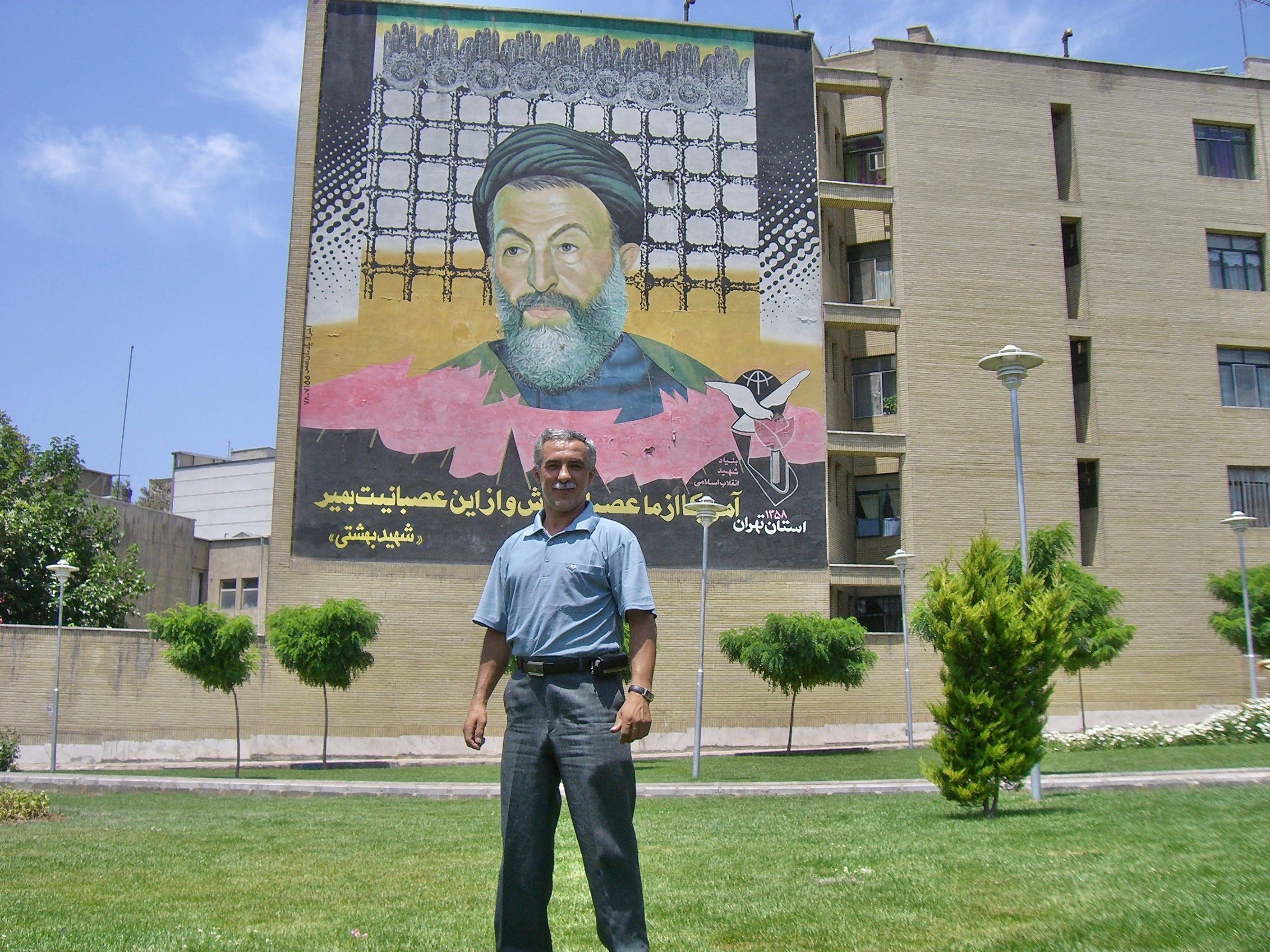
In early 2006, I accompanied Ghadery on an outing to the Imam Khomeini Mausoleum in Tehran on the national holiday that Khomeini’s death anniversary has become.
For an ostensibly anti-American hardliner, Ghadery was welcoming. He was keen to tell me his story.
As a teenager, Ghadery printed fliers with Khomeini’s image and posted them around Tehran as the revolution unfolded. After the shah was gone, he made posters of revolutionary heroes, such as those who took over the U.S. embassy. Later he fought in the Iran-Iraq war. He told me he was “deeply sorry for not becoming a martyr.”
After the war, Ghadery made a living painting murals of martyrs on buildings and facades across Iran. He took me around Tehran pointing them out.
But by the time I met him, Ghadery was 47 years old. The feverish martyrdom complex that two decades earlier had gripped the country — and tightened the regime’s grip on the country — had largely run its course.
Revolutionary mural work dried up.
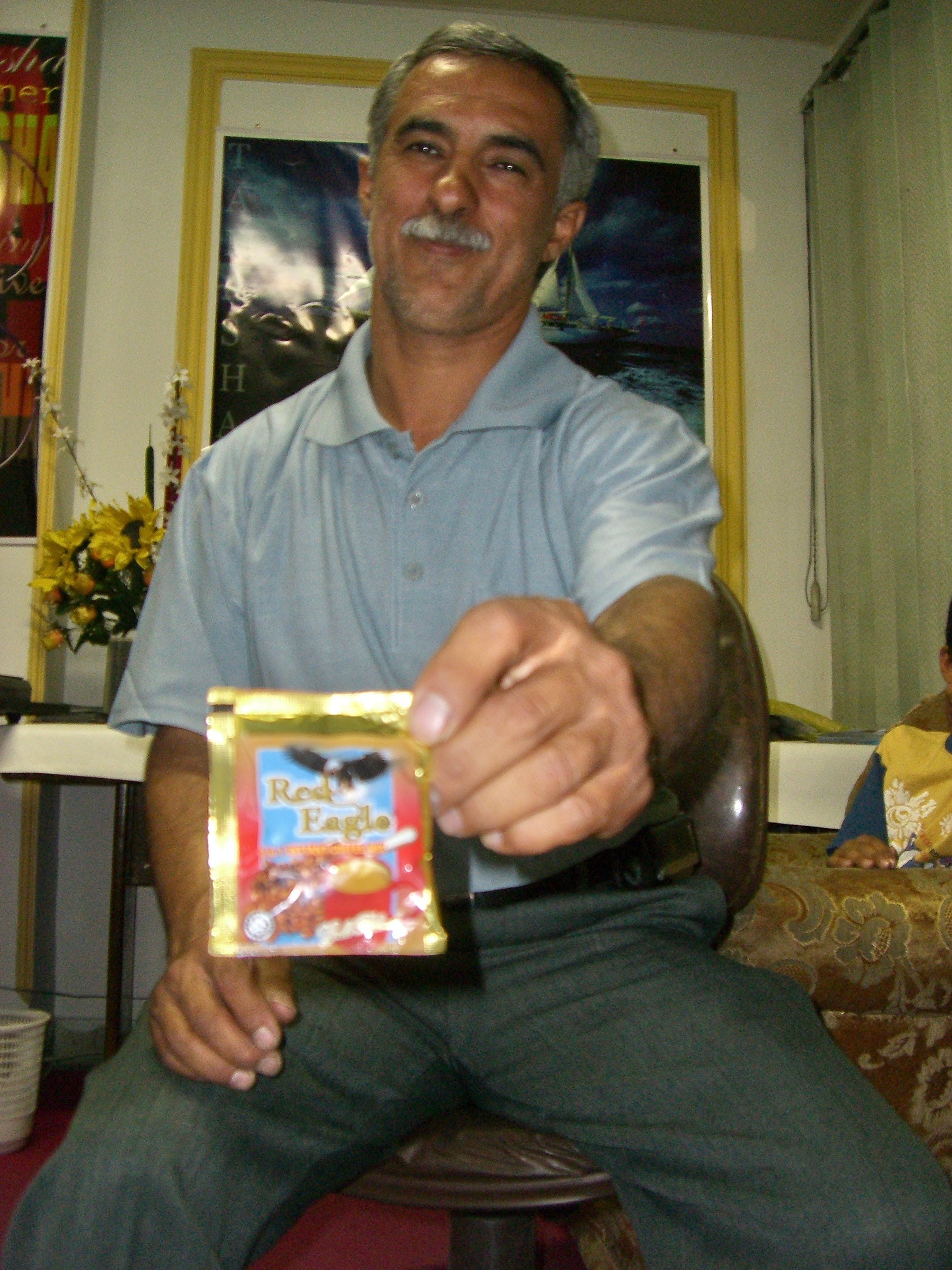
Ghadery had turned largely to commercial graphic design jobs to support his family — toothpaste advertisements, fruit juice labels, that sort of thing.
Here’s one he showed me he made for packaged nuts (forgive the out-of-focus photo!):
Still, once a year Ghadery told me that he relished in joining hundreds of thousands of Iranians to visit the Imam Khomeini Shrine on the anniversary of the Ayatollah’s death.
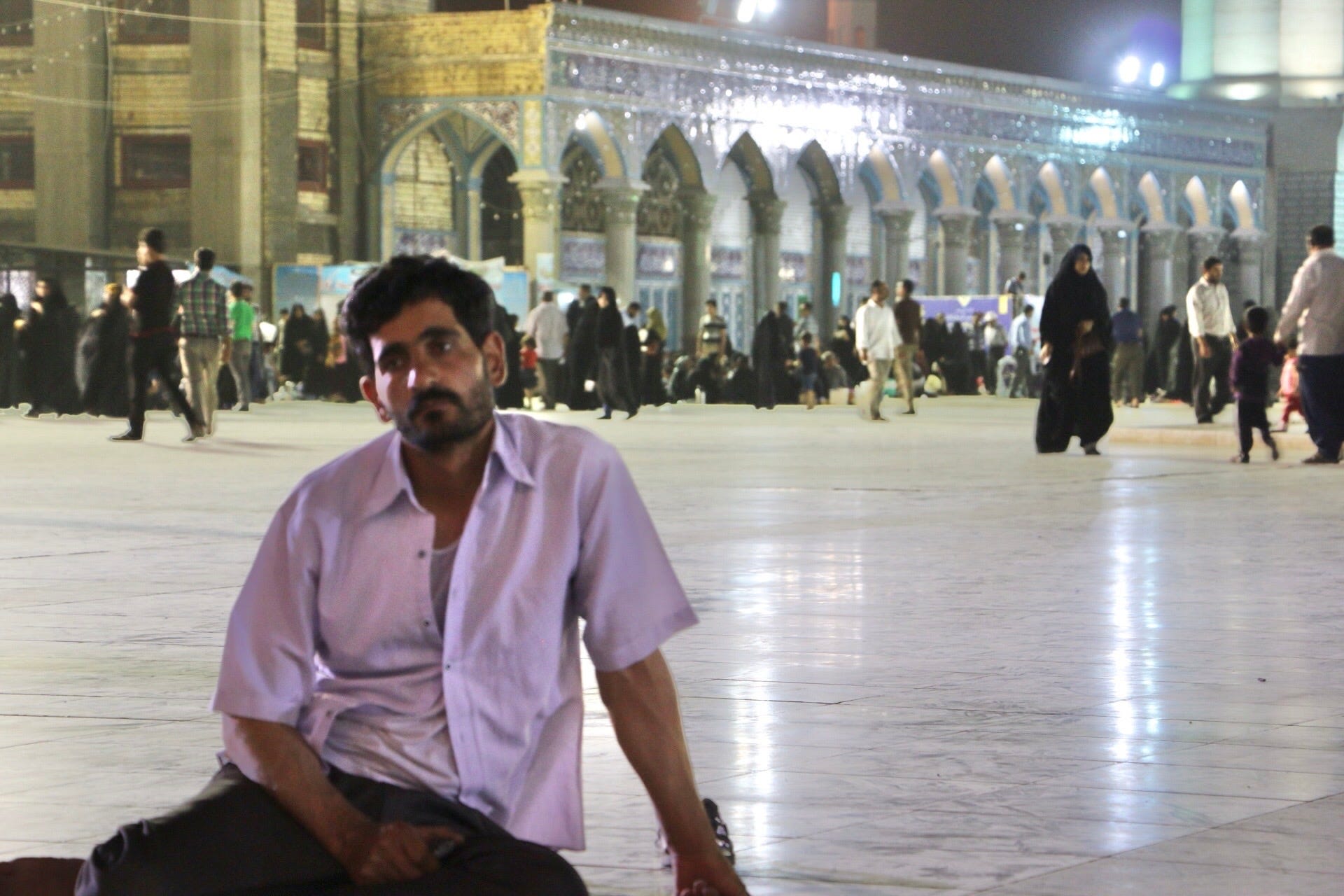
We hopped in my car and headed for the shrine, out near the Ayatollah Khomeini International Airport. Soon we hit the traffic jam. Both sides of the four-lane freeway were clogged with cars, pickup trucks, buses and lines of people walking towards the mausoleum. Picnickers were lined up along the sides of the freeway.
As if on cue, Ghadery began weeping theatrically as the shrine came into view. This was part performance, for sure. But he was also experiencing a legitimate nostalgia for the religious meaning Khomeini had brought to the revolution and the higher purpose that had motivated the nation to pursue during the Iran-Iraq war.
Ghadery clearly missed this.
Well, this sense of purpose is suddenly back for many devotees as the bombs fall on Iran and the Islamic Republic’s enemies call for its end.
In one sense, the religious underpinnings of the government are all but gone. Khamenei the elder — second in a line of leadership that was supposed to be the opposite of hereditary — has been replaced as supreme leader by a son who has even fewer religious credentials than his father brought to the position.
In another sense, though, it seems Mojtaba Khamenei was chosen to plumb the sense of grievance, of betrayal, of profound suffering at the heart of Shiite Islam.
The central figure of Shiism is Hussein ibn Ali, grandson of the Prophet Mohammed. Hussain was killed in the Battle of Karbala in the year 680 fighting an underdog’s battle against powerful foes for his family’s rightful place.
Mujtaba Khamenei’s father, wife, and son were all killed by powerful Israelis and Americans in the initial bombing runs of this war.
Mujtaba is a career regime insider who helped build his father’s powerful edifice. It’s unclear to me at this point whether he’s the real power at the top, or simply a symbol being wielded by the powerful former IRGC commanders and longtime political heavy weights Ali Ardishir Larijani (currently secretary of the Supreme National Security Council) and Mohammad Bagher Ghalibaf (speaker of parliament).
Those who chose Mujtaba know his is a powerful narrative that packs a double punch. It will motivate the regime’s followers while at the same time undermining opposition.
They’re being asked, are you for outside oppressors attacking us? Or for the nation?
And why the real battle for the country can’t begin until the current war ends.
Thank you for a look at the people inside Iran, and the history of their leadership.