So the big question, then: What would the country’s largest U.S. utility becoming even larger mean for the energy transition?
This post continues our look at the proposed merger of Forida-based NextEra Energy and Virginia-based Dominion Energy into single mega-utility that would be regulated in those two states while operating nationally and even internationally.
Read through earlier posts in the series if you haven’t yet. They build on each other.
So far, we’ve looked at:
The importance of electricity in the future of energy and the energy transition.
The complexity of the current moment in the U.S. electricity system.
The history of NextEra’s core regulated utility business, the company’s Florida Power & Light division.
The history of Dominion, especially the humongous role data centers have played in the company’s growth — and attracting the covetous eye of NextEra.
The grassroots political firestorm that’s broken out around data centers, how governors have wound up at the center of this firestorm, and how the merger proposal has thrust Virginia’s governor, Abigail Spanberger, into the nexus of AI, energy and national politics.
The grid, the sprawling electricity machine known as PJM Interconnection, which is struggling to deliver power to Virginia and a dozen other states without imposing eye-popping rate increases on consumers.
Now we turn to how all this is influencing the mix of energy resources that provide electricity. The proposed mega-utility is effectively a window on the impact of data centers for artificial intelligence, a harbinger of what’s coming for the electricity system of the whole country.
Florida and Virginia are the Jupiter and Mars of energy, following different approaches yet spinning a similar orbit.
The Sunshine state government has done little to push the power system towards renewables and away from fossil fuels. Virginia’s Commonwealth, on the other hand, has ordered its utilities to build clean energy and dump fossil fuels.
The two approaches flow from the two states’ dominant political currents over the past decade: ruby red Republican in Florida, blue-leaning Democratic in Virginia.
Yet for the dominant electricity companies the result has been largly the same: a decisive shift towards clean, renewable energy.
Until lately.
We’ll get to that. First, it’s important to understand the interplay of politics, policy, and market forces shaping the transition in the two states, and the U.S. electricity industry.
These are playing out in distinct ways in different states.
NextEra embodies this. Recall that the company is divided into two parts: the regulated monopoly operating in Florida, and the unregulated NextEra Energy Resources, a developer that operates across the U.S. and Canada.
For much of the past three decades, NextEra’s Florida Power & Light reflected the Florida government’s lackluster interest in renewable energy. Despite its moniker, neither the state or its biggest monopoly utility was an early leader in developing solar.
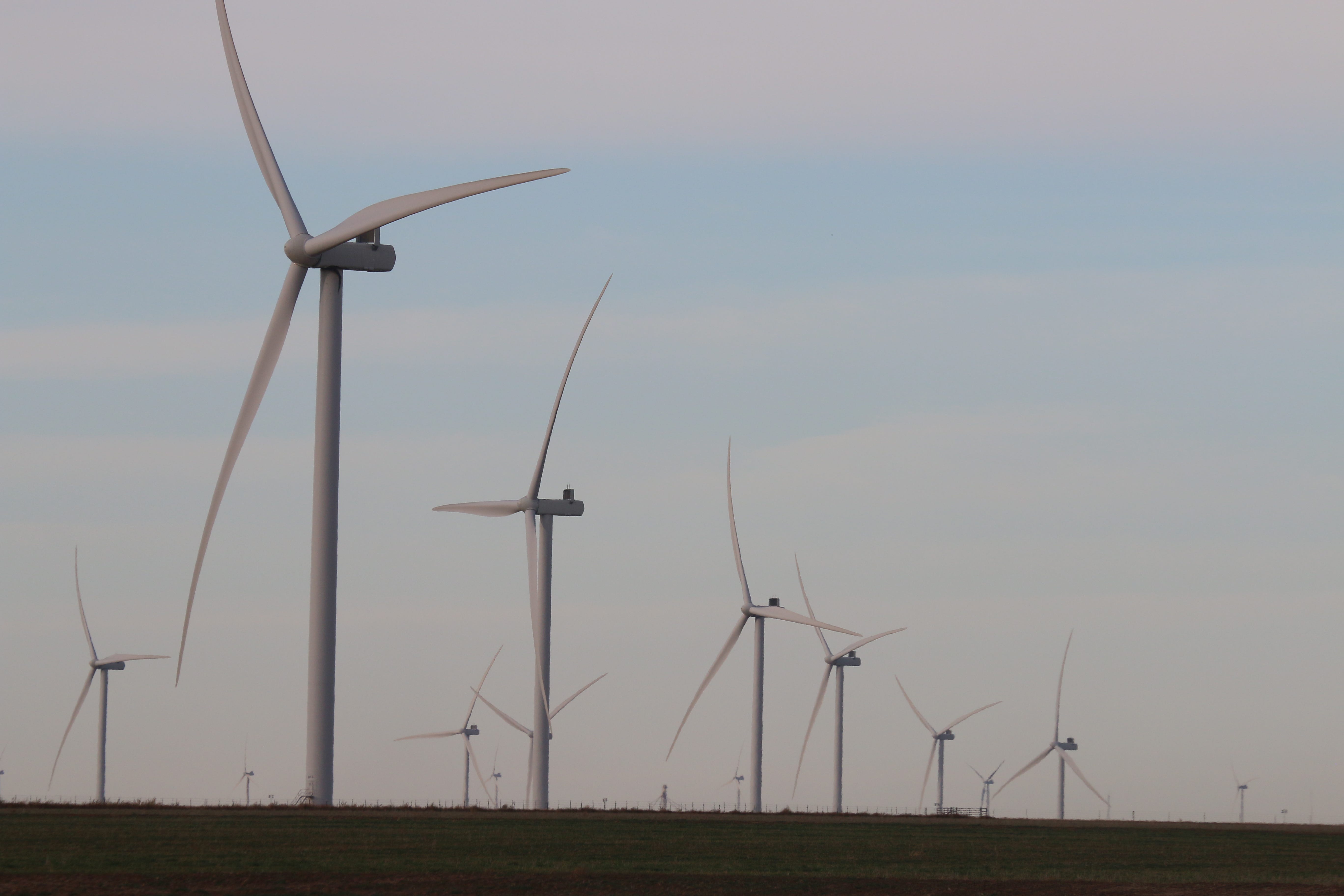
Meanwhile, the unregulated side of NextEra turned itself into a renewables juggernaut outside of Florida. NextEra Energy Resources became the largest installer of wind and solar power in the nation. Projects spanned from California to Texas, Iowa, Oklahoma and Kansas, embracing both wind and solar.
As the cost of solar panels fell and governments began subsidizing renewables, Florida Power & Light launched an aggressive push to build solar farms across the state. Significantly, the company simultaneously lobbied against legislation designed to encourage rooftop solar on homes and businesses — which would wean electricity sales away from FPL — even as it built its own solar farms across the state.
Meanwhile, Virginia’s political leadership deliberately encouraged clean energy through state law. In 2020, the state’s then-Democratic governor and legislature pushed through a law requiring coal to be shut down and renewable resources to be built. The Virginia Clean Energy Act mandates Dominion to shutter gas plants by 2045, though it contains provisions to sidestep the requirement to avoid the risk of blackouts or degrading electricity reliability.
Dominion slated coal plants for closure and is now building what will become the country’s largest off-shore wind farm, Coastal Virginia Offshore Wind. It began generating electricity in March. When finished next year, it will consist of hundreds of 800-foot-tall turbines installed 27 miles off Virginia Beach, generating enough electricity to power 660,000 homes.
The project was well underway when the Trump administration returned to office vowing to kill the wind industry. It’s managed to proceed despite that.
Dominion also has a strong slate of solar projects either built or in the pipeline, including major new battery storage facilities to help stretch the use of cheap renewable energy into the evening and through less-windy periods.
However, the march towards cleaner in Virginia — as with many places in the U.S. these days — has been complicated by the Trump administration’s campaign to promote fossil fuels and thwart clean energy, as well as the rush to build data centers for artificial intelligence.
Dominion has tacked back to building natural gas plants.
Last year, it began seeking permission from regulators to build a large natural gas “peaker” plant and an even larger combined-cycle gas plant. The latter would be bigger than Coastal Virginia Offshore Wind. Indeed, it would be larger than any natural gas plant in the country except for a Florida Power & Light facility on that state’s Gulf coast.
Dominion argues both plants are critical to avoiding blackouts as energy demand climbs, and they should therefore be exempted from the state’s clean energy mandates.
In Florida, on the other hand, NextEra’s Florida Power & Light continues to build out generation almost entirely with clean energy, balancing its overall heavy dependence on gas.
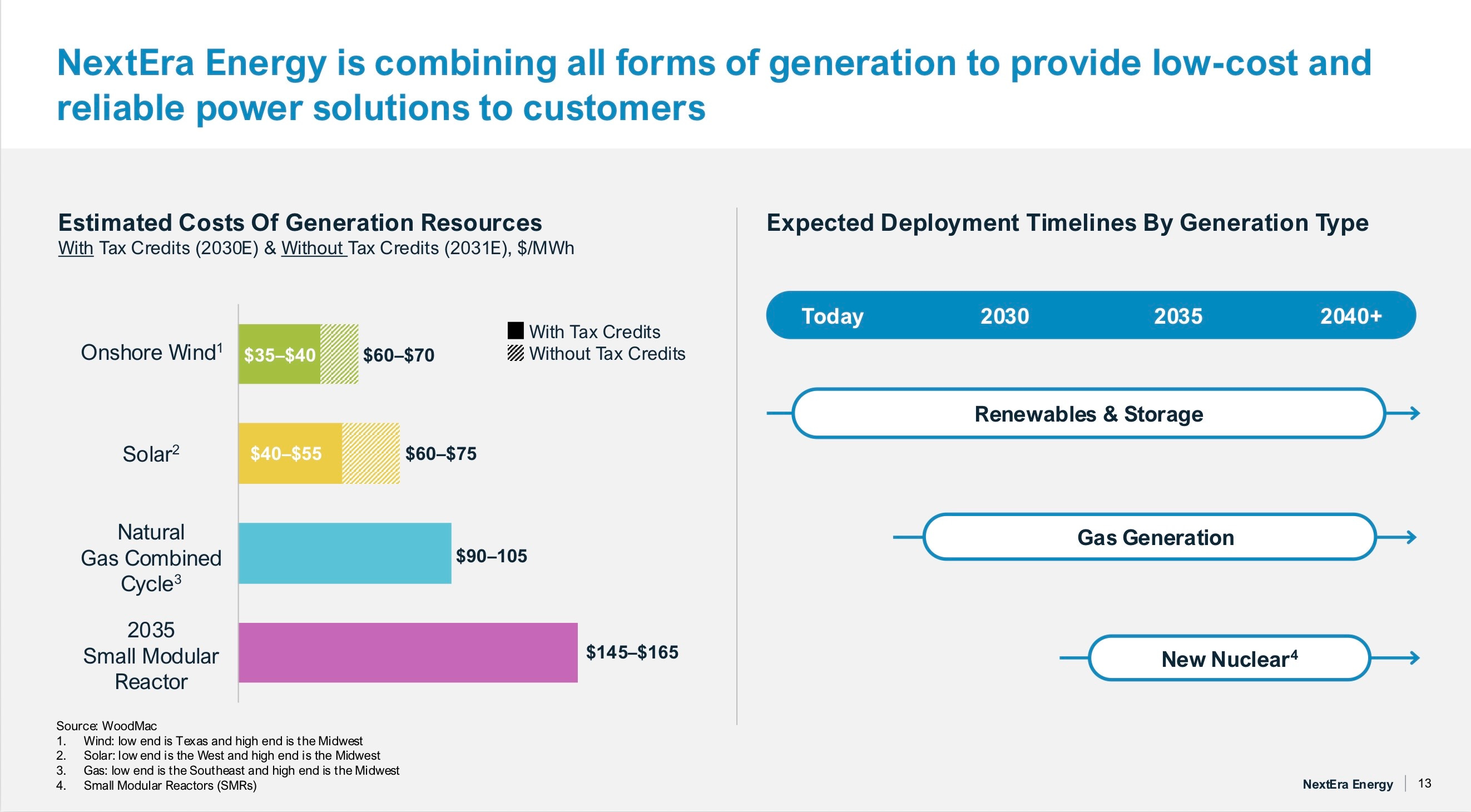
Meanwhile, the parent company NextEra — the nation’s biggest renewables developer — is now also aggressively adding natural gas to meet both data center demand and work with the Trump administration desire to boost domestic fossil fuel use through deals with U.S. trade partners.
In Texas and Pennsylvania, two of the country’s largest gas-producing states, NextEra is working with the Trump administration and Japanese investors to build large-scale gas generation plants in the two states. It’s also working with ExxonMobil, the country’s largest fossil fuel company, to develop gas plants that would deploy carbon capture to keep carbon dioxide emissions to a minimum.
Finally, both Dominion and NextEra are looking to boost nuclear power as a way to add always-on electricity generation resources to their offering.
NextEra recently received authorization from the U.S. Department of Energy to borrow nearly $2 billion to restart a nuclear reactor in Iowa, with Google as the main contractor for the electricity. The company is also exploring ways to build Small Modular Reactors (SMRs), a so-far untested genre of nukes of which only one has received approval from regulators.
Dominion is also involved in an even more cutting edge project to build the world’s first commercial fusion energy facility in Virginia. (I visited a demonstration project the same company, Commonwealth Fusion Systems, is building in Massachusetts).
In short, it’s not easy to see any relationship between the size of a utility and the energy transition — at least when it comes to the energy mix. Big monopoly utilities seem to behave more or less the same as smaller ones when determining how to generate the electricity they sell: whatever is most profitable for them.
What big utilities might well do better than smaller ones, though, is avoid doing what is less profitable or resist having the incentives governments impose on them altered.
That will be the subject of the next and final post in this series.