Donald’s Choice
Go big or go home. Either way changes world.


Decision time has come for Donald Trump in the three-way war between Israel and the U.S. and Iran. Whichever door he chooses will alter global power politics far beyond the Gulf, substantially and permanently.
He may escalate, ordering the U.S. military to forcibly open the Strait of Hormuz and overthrow the Iranian regime with some form of an invasion. Or he may seek calm by ending the fighting — at least by the U.S. — and hope oil flows and markets settle.
The first choice carries a high risk of large-scale casualties at worst, U.S. military vessels navigating mines and fending off attacks at best. But the biggest risk is that none of this works. Less, not more, oil may reach global markets in the end — leading to much, much higher energy prices for far longer, despite the effort.
The second choice, on the other hand, requires serving up some very thin victory gruel: the Islamic regime still in charge, still with a large stockpile of nearly bomb-grade nuclear fuel, still menacing the most important energy corridor in the world. The strait may open, but not by dint of U.S. power but rather a lack of it.
Either of these two paths leads to a transformation of the security and energy landscape more profound even than the energy crises of the 1970s, the last time anything close to this magnitude took place.
Of course, other outcomes can’t be completely ruled out.
The Iranian regime could deplete its fire power over the next few weeks and give up, perhaps even collapse from within. That would also be a major change for the region, though not one that would fundamentally change the world.
The U.S., Israel and Arab Gulf states could run so short interceptors and air defenses that they’re overwhelmed even by Iran’s much-diminished offensive capacity and fracture into incoherent squabbling. This wouldn’t alter global realities, either, since coordination between these three is far less than complete and effective as it stands.
Most likely, though, where the conflict goes now lies with Trump.
Time is not on his side.
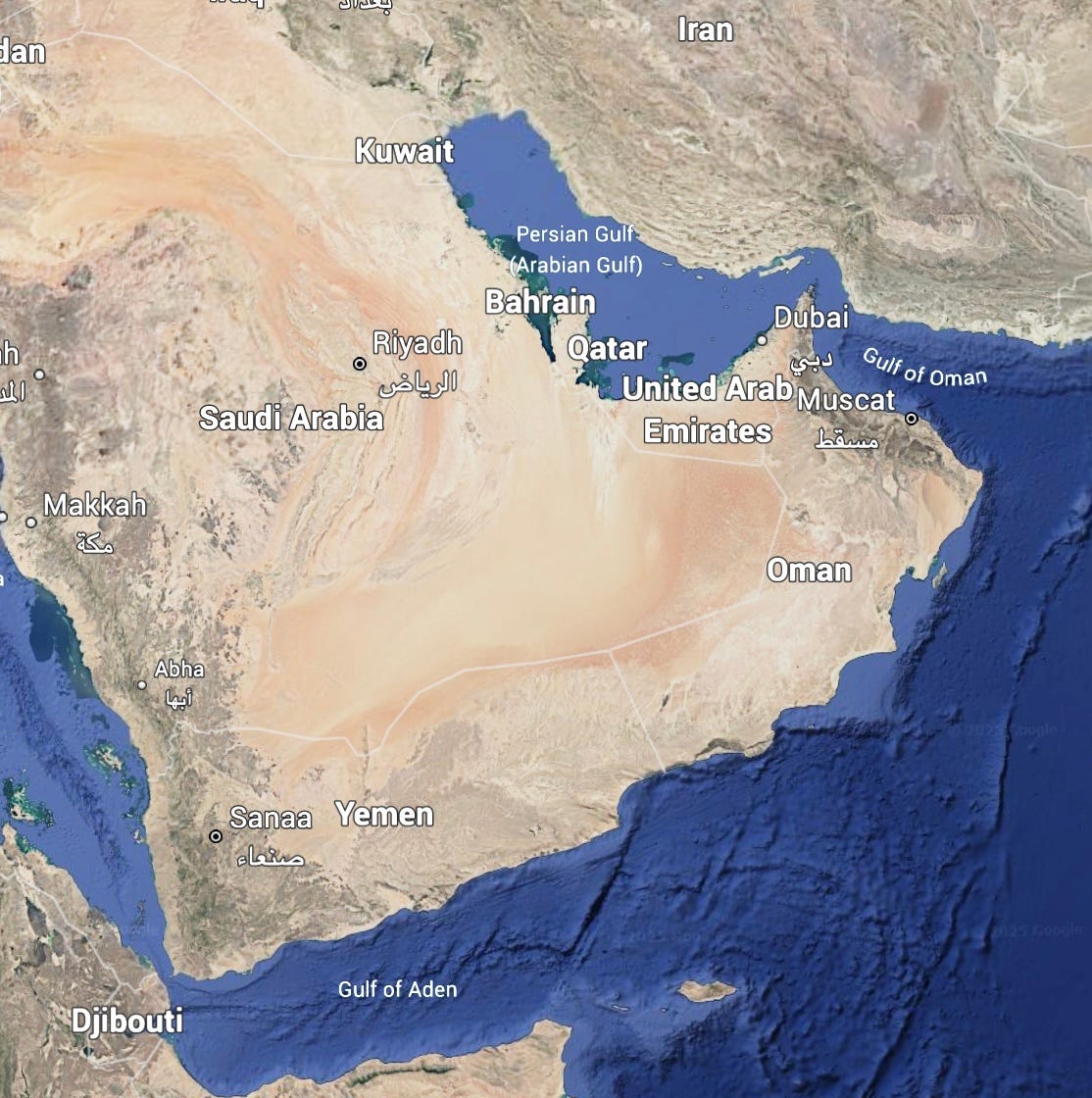
So far, he’s been fairly successful at keeping headline oil prices from skyrocketing to unbearable levels, at least in the U.S.. Most of the rest of the world is suffering far more, especially poor energy importers or those with little to no cushion — countries like Bangladesh, Pakistan, Vietnam, Thailand and India.
Enough oil is flowing, by hook and by crook, through workarounds to the Hormuz Strait and releases of stockpiled crude supplies, to keep a lid on prices — especially the all-important U.S. benchmark, West Texas Intermediate grade oil. Americans aren’t feeling too much direct pain yet.
Beneath the surface, though, the prices of specific products derived from oil — jet fuel, diesel for factories and logistics, maritime fuel for shipping everything needed for everything — are reaching much higher price levels.
The volume of oil reaching global markets isn’t close to enough to replace what’s blocked from leaving through the Strait of Hormuz. Markets will inexorably move from prices set by best guesses for when the conflict will end to a scramble for actual oil.
This will push prices far higher. High enough that consumers — drivers, flyers, factories — are forced to cut back, a lot. What oil continues to be purchased will prove very dear, perhaps $175 a barrel (West Texas Intermediate crossed $100 per barrel for the first yesterday since the crisis started), perhaps $200 a barrel.
Conceivably higher.
This would cause a world-wide recession.
So Trump will have to do something soon — either escalate or climb down.
Escalation consists of pushing U.S. military ships, starting with mine sweepers, through the Strait. Until they, at least, are able to pass unmolested, no commercial ships will even contemplate making the passage without Iranian permission.
To assure they pass unmolested, U.S. ground troops may well be needed. At the very least, Iran’s Kharg Island would probably be taken. This could give the U.S. control over Iran’s ability to export much of its own oil, like holding a hostage. At most, more troops would be needed to gain control over Iran’s mountainous coastal region along the Strait — in other words, a full-scale invasion force.
In either case, U.S. troops would be highly vulnerable.
An even taller order: destroying or removing a cache of highly enriched uranium that, if you’re the regime, now appears to be the best long-term defense. The country’s nuclear program has been all but destroyed by Israeli and U.S. bombings. But this fuel could be fairly quickly turned into several nuclear bombs if Iran retains, or rebuilds, even a limited uranium processing capacity.
That’s all they may need to prevent more attacks if North Korea is any a guide.
But finding and removing or destroying all this nuclear material while the regime retains control of the country is something approaching a mission impossible.
And even if all of these challenges could somehow be met — Kharg Island taken, the Strait reopened by force, nuclear fuel dealt with — there’s no guarantee the whole risky operation would accomplish its goal of getting more oil on the market.
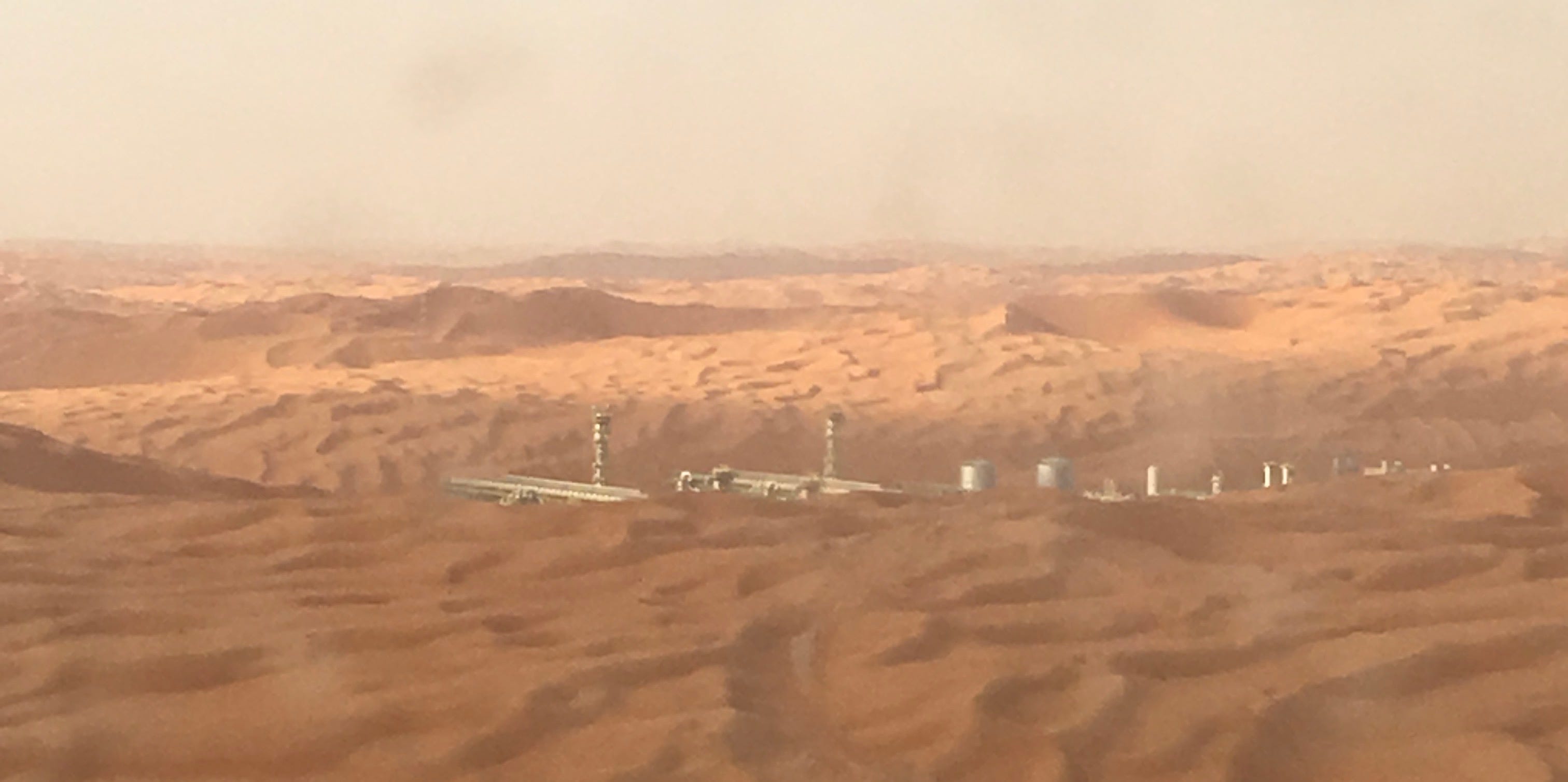
The Iranian regime has made clear any of these moves would be met with uninhibited attacks on oil and gas infrastructure around the region. The Revolutionary Guard has already proved capable of this, launching selective but damaging attacks on oil and gas installations in Qatar, Saudi Arabia, the United Arab Emirates and Oman.
Houthi fighters in Yemen — closely aligned with, and trained by, Iran — reared their heads over the weekend with what I would call a shot over the U.S. bow with an attack on Israel. The Houthis have already shown they can shut down shipping lanes on the Red Sea, including the narrow Bab al-Mandeb strait, through which most of Saudi Arabia’s oil is now transiting with the Gulf of Hormuz closed.
They are capable of directly hitting Saudi oil installations.
In other words, combined retaliation by Iran and their Houthi allies might take as much or more oil off the international market than any U.S. military operation in the Hormuz strait would bring back.
Iran’s regime could wind up with an effective veto — directly and via the Houthis — over any and all crude oil and gas shipments through either channel — not to mention the whole array of other essential goods that traverse both of these sea lanes.
Faced with all this, Trump may well climb down.
In the short term, the down sides could be downplayed and mitigated, at least rhetorically in the short term. Once attacks on Iran stopped, Europe and perhaps even eventually China could be pulled into an internationalized effort to open the strait that Iran might actually go along with if involved.
The regime won’t allow its enriched uranium to leave the country. But it’s not impossible to imagine the regime at some point allowing inspectors in to account and inspect its remaining nuclear material.
Loosening of sanctions — the inevitable Iranian quid pro quo demand — would be a hard pill for Washington’s Iran hawks to swallow to say the least, but perhaps less so for Trump given the alternatives.
What he would get is immediate relief. Oil and gas flowing. Prices falling.
By the time the dust settles the new reality might begin to feel normal.
But in this scenario, too, the region’s underlying power balance would be dramatically changed: the total U.S. military dominance over the Middle East will have wavered for the first time since it was first established during the Suez crisis in 1956 and bolstered during Britain’s 1971 withdrawal from the Gulf.
With Iran’s defenses weakened and the U.S. pulling back, Israel would surely feel compelled to return to bombing Iran whenever necessary, the so-called mowing of the grass it has subjected Lebanon and Gaza to over the past two decades.
To try to fend them off — or at least assure some pressure could be brought to bear upon them from the rest of the world — Iran would maintain at least a veto on shipping in the Strait of Hormuz and through the Bab al-Mandeb.
This would be entirely unacceptable to the Arab Gulf states, whose prospects depend almost entirely on unfettered access to global markets for their oil and gas.
They’ve traditionally hosted U.S. bases to assure that unfettered access. But either door Trump chooses, that’s not likely to be the outcome.